
A.Team — The Solutions Monument
In September 2026, I designed a scroll-driven 3D monument for A.Team’s Solutions page. It began with A.Team’s draft table of their platform and one concept image, and it tells the platform’s story layer by layer before landing on the production diagram.

Giving A.Team’s Platform a Shape
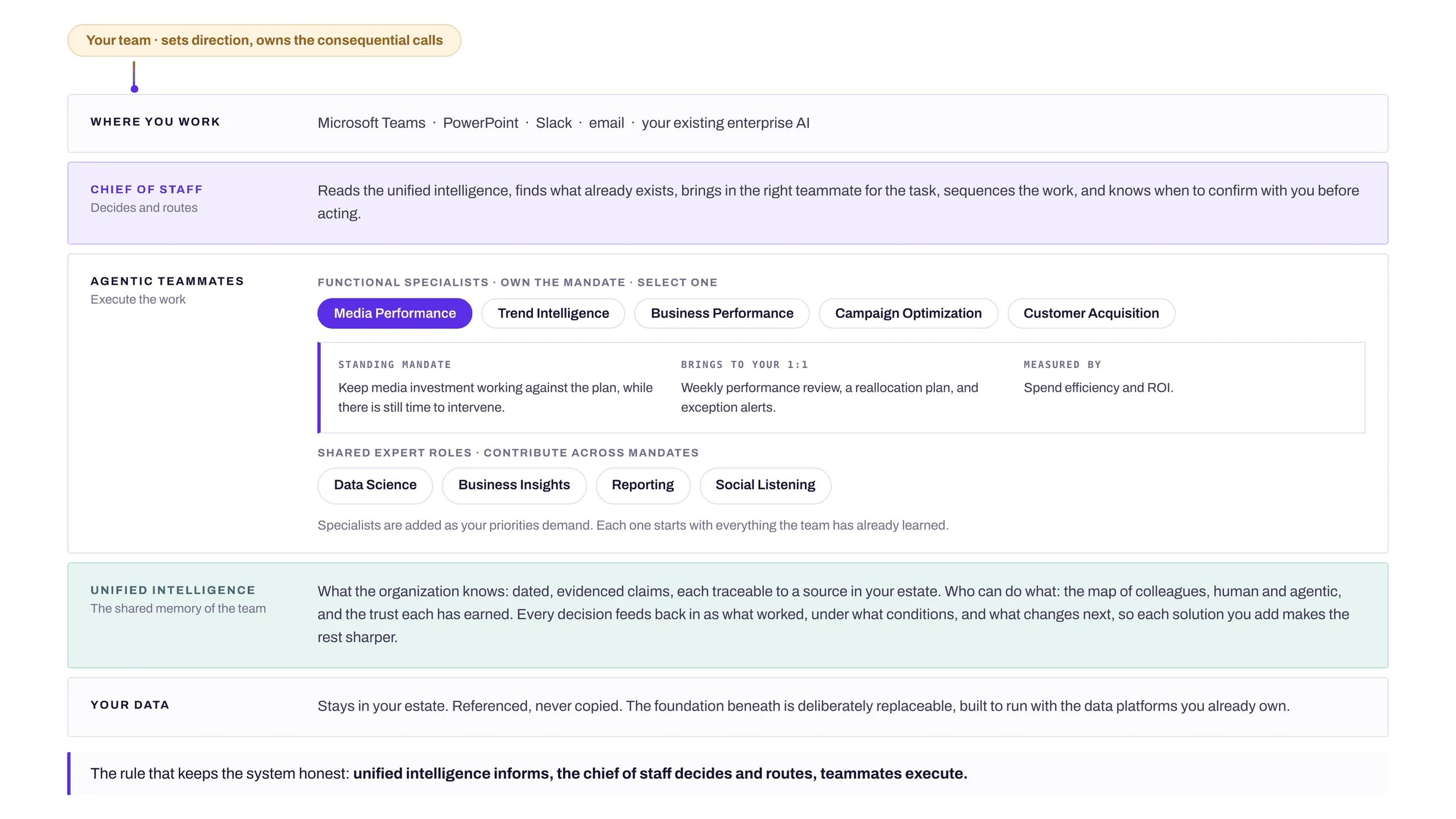
A.Team builds agentic teammates with forward deployed engineers who work inside their clients’ companies. In A.Team’s draft of their Solutions page, from August 2026, the platform behind those teammates was a flat table of five rows. It ran from the tools a client already works in down to the client’s own data. That draft table became the production diagram.
How could I turn that table into one object a reader follows with the scroll, without adding a word to it?
High-Level Goals
Turn the five rows of A.Team’s platform into one object, using only their own copy.
Keep the scroll native, so that scrolling back up plays the story backwards instead of fighting the reader.
Land on the production diagram, and fall back to it on every screen or browser that cannot play the scene.
Exhibit · the Solutions monument
A.Team’s Solutions monument, as approved on 22 September 2026
The scroll-driven section from A.Team’s Solutions page, playing here one to one: the same scene, the same fail-safes, the same production sheet at the end.
Specialists are added as your priorities demand. Each one starts with everything the team has already learned.
rule · 01
Five Rows, One Object
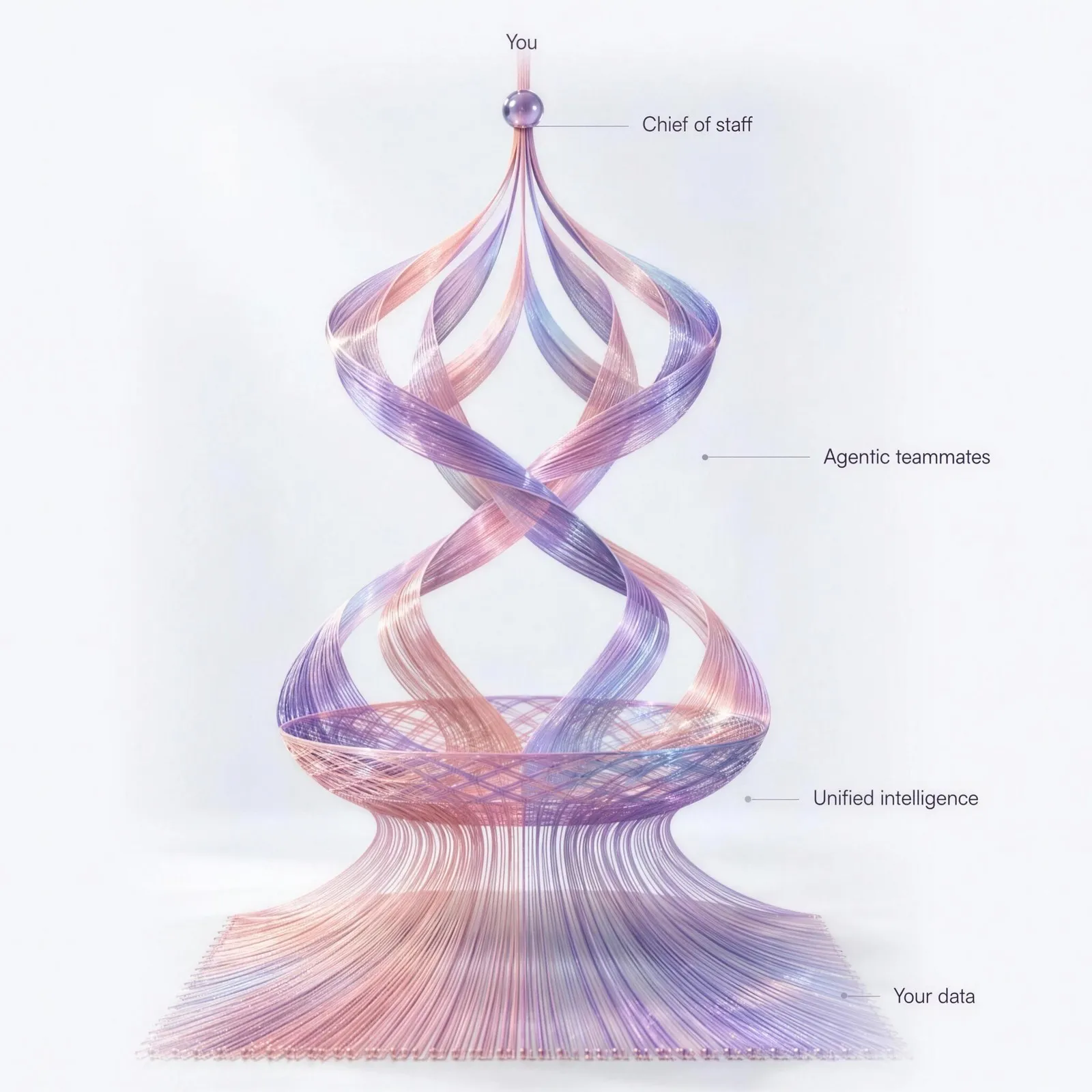
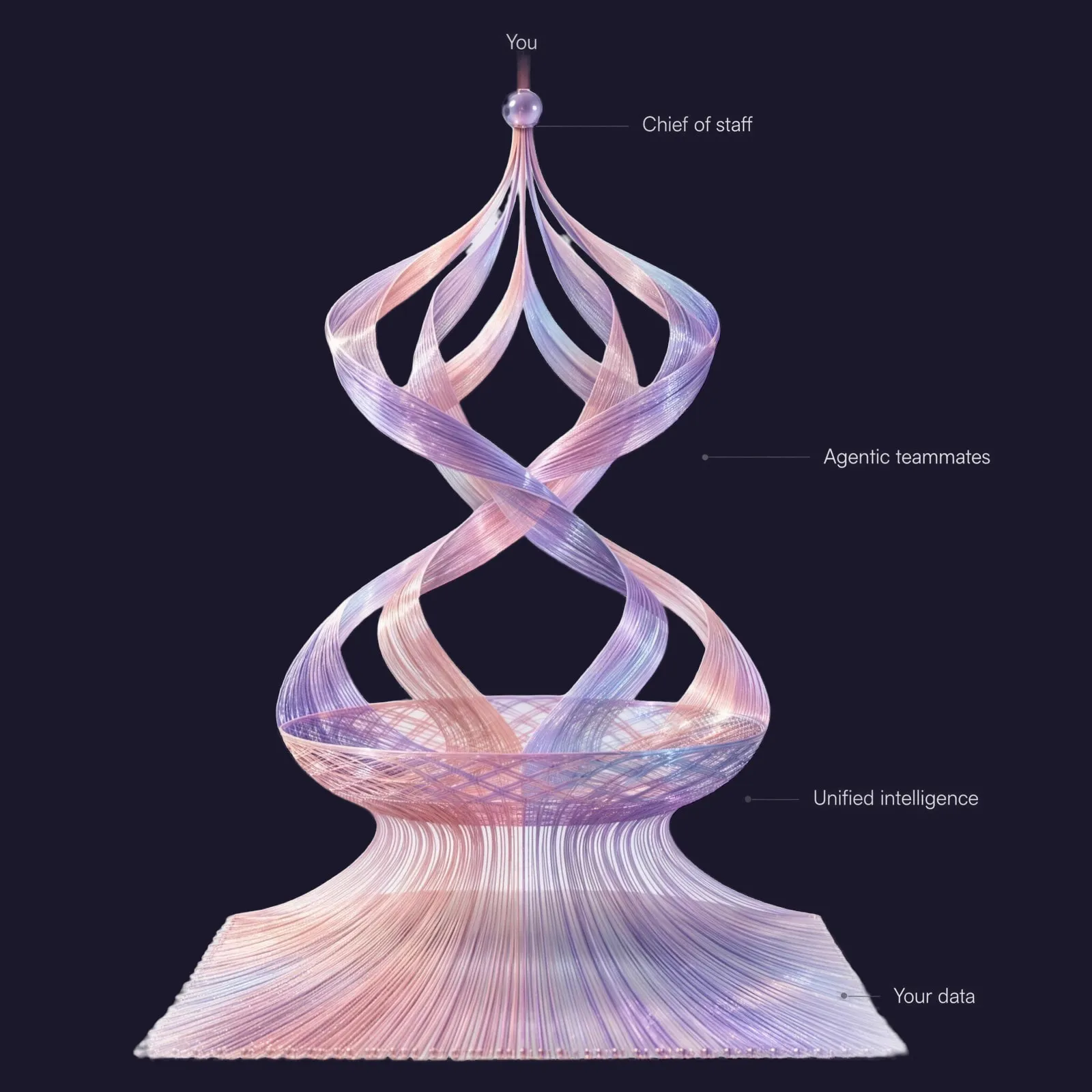
The monument started from that table and from this concept image, which A.Team sent me before the first round of prototypes. The image draws the same platform as one woven object, and four of its five labels are the names of the table’s rows, in the same order.
However, following it was the challenge, and it took four storyboards. The first relied too much on the production diagram, the second gave every chapter an object of its own, and the third left one layer floating alone in a mostly empty screen.
The fourth storyboard followed the image itself: the whole object first, then down from top to bottom.
Every layer stays attached
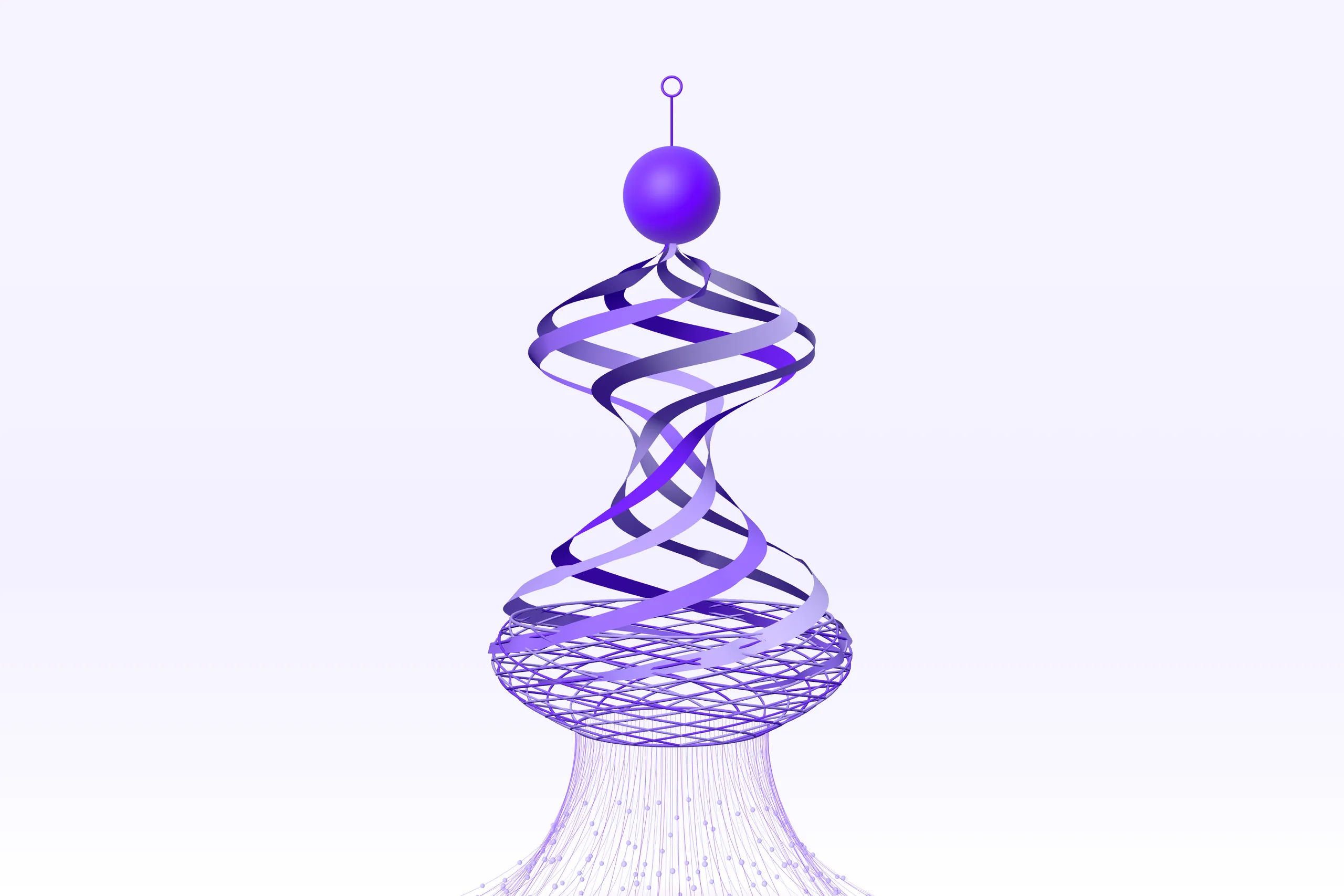
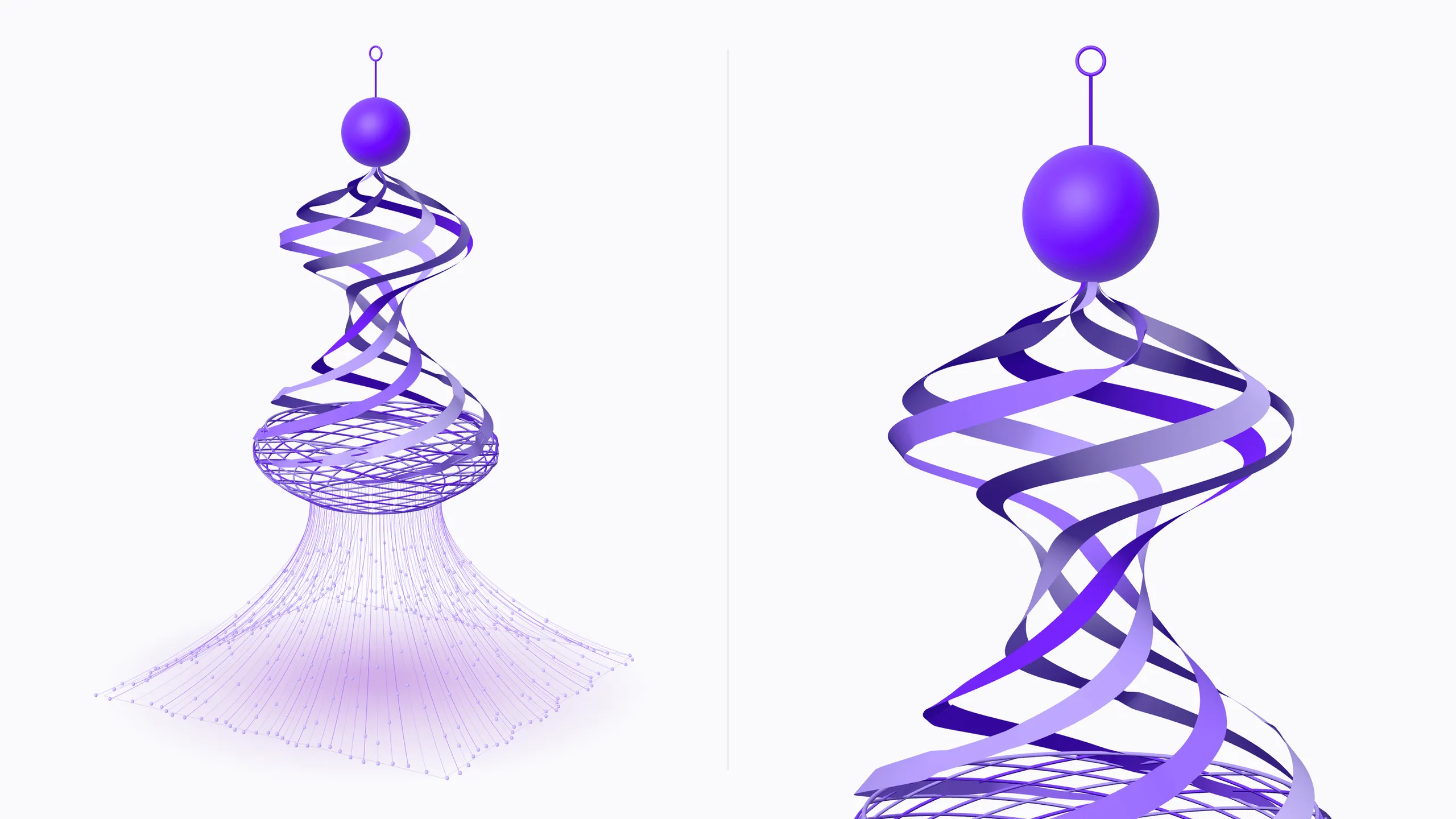
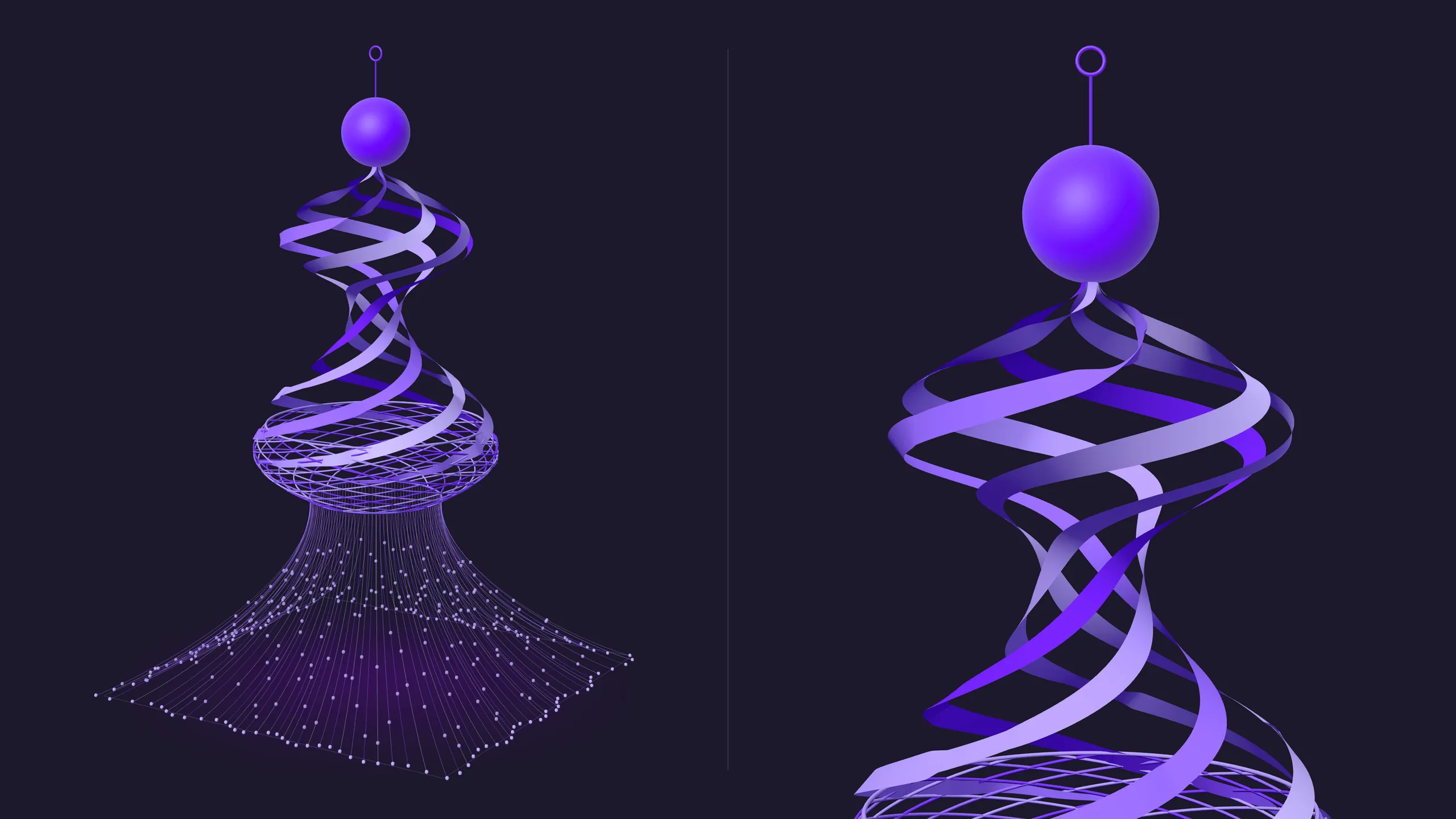
In that storyboard, the image became one continuous structure: an origin mark for the reader’s own team, a thread, a sphere for the chief of staff, a braid of “five strands interleaving” for the named agents, a woven basket for the shared memory, and a skirt of “fibers fanning into a broad data field”. Its rule was that no layer “ever floats alone in a majority-empty viewport”.
Each of those layers answers to a part of A.Team’s draft table, in the same order, from the Your team chip at the top down to Your data.
The monument at the top of this page is ported from A.Team’s page with their own type, so it plays here as it was approved. It opens the way the concept image does, on the whole object with a label beside each layer on a hairline. Here each label is a full line from the production diagram, such as “Chief of staff · decides and routes”. The scroll is native, and every value in the scene follows how far the reader has scrolled, so going back up plays the story backwards. Each chapter docks the camera at one layer while the others stay visible, receded but never gone.
Here are two still views of the finished monument: the whole object from a raised three-quarter view, and its crown up close.
Chapter 03 is the one the reader can touch. Selecting one of the five specialists brings up its mandate in a card, word for word from the production diagram, as the second frame at the end of this page shows.
The last move pulls back to the whole monument, and its layers turn into the rows of the production diagram, whose tabs keep working after it lands. That diagram replaces the scene for a reader who asked for reduced motion, whose browser cannot draw it or download it, or whose window sits between a phone and a laptop, where the callouts had no room. Phones get a portrait scene of their own.
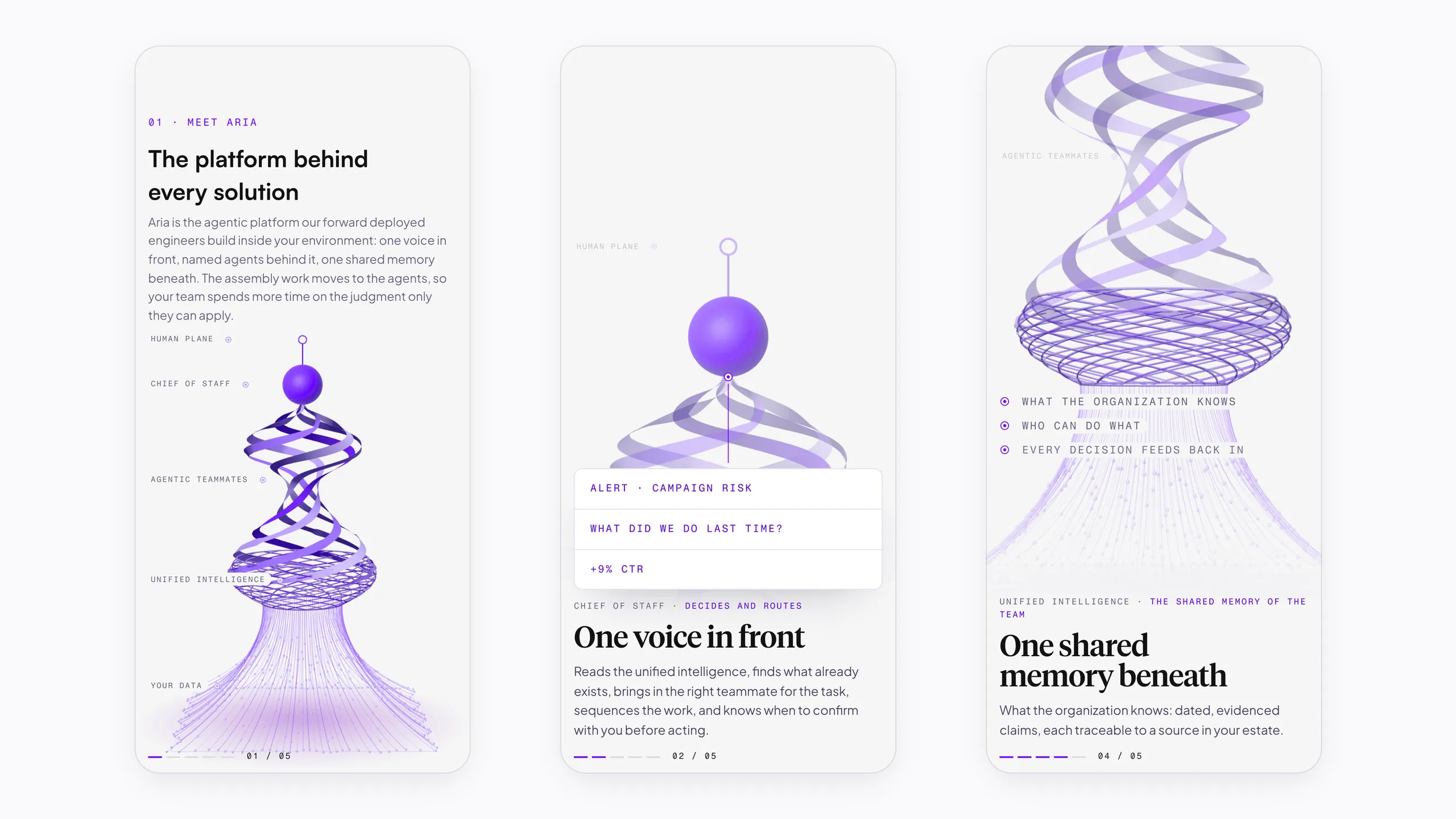
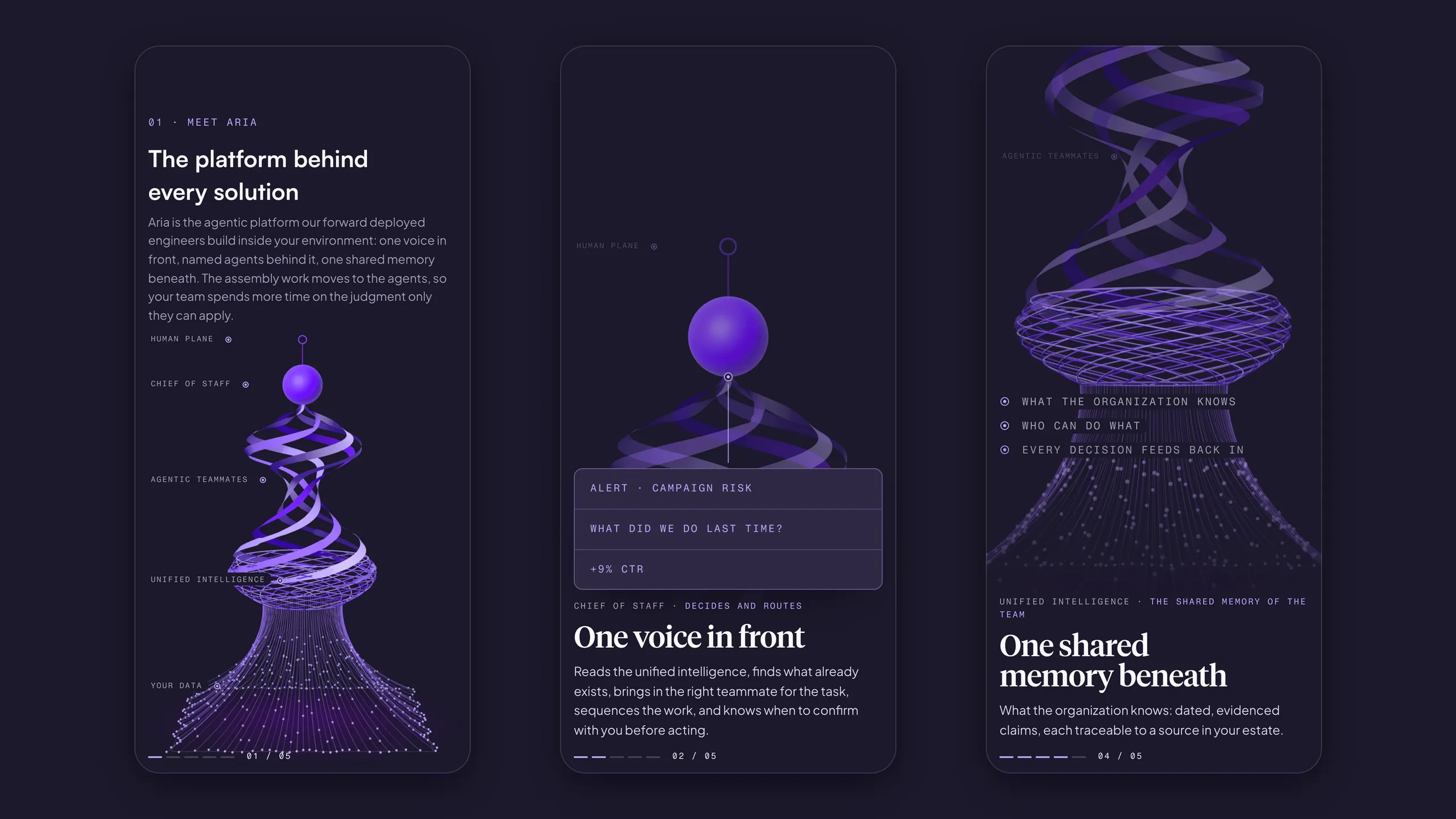
Below you will find four frames of the scroll as a reader sees it: chapters 01, 03, 04, and 05.
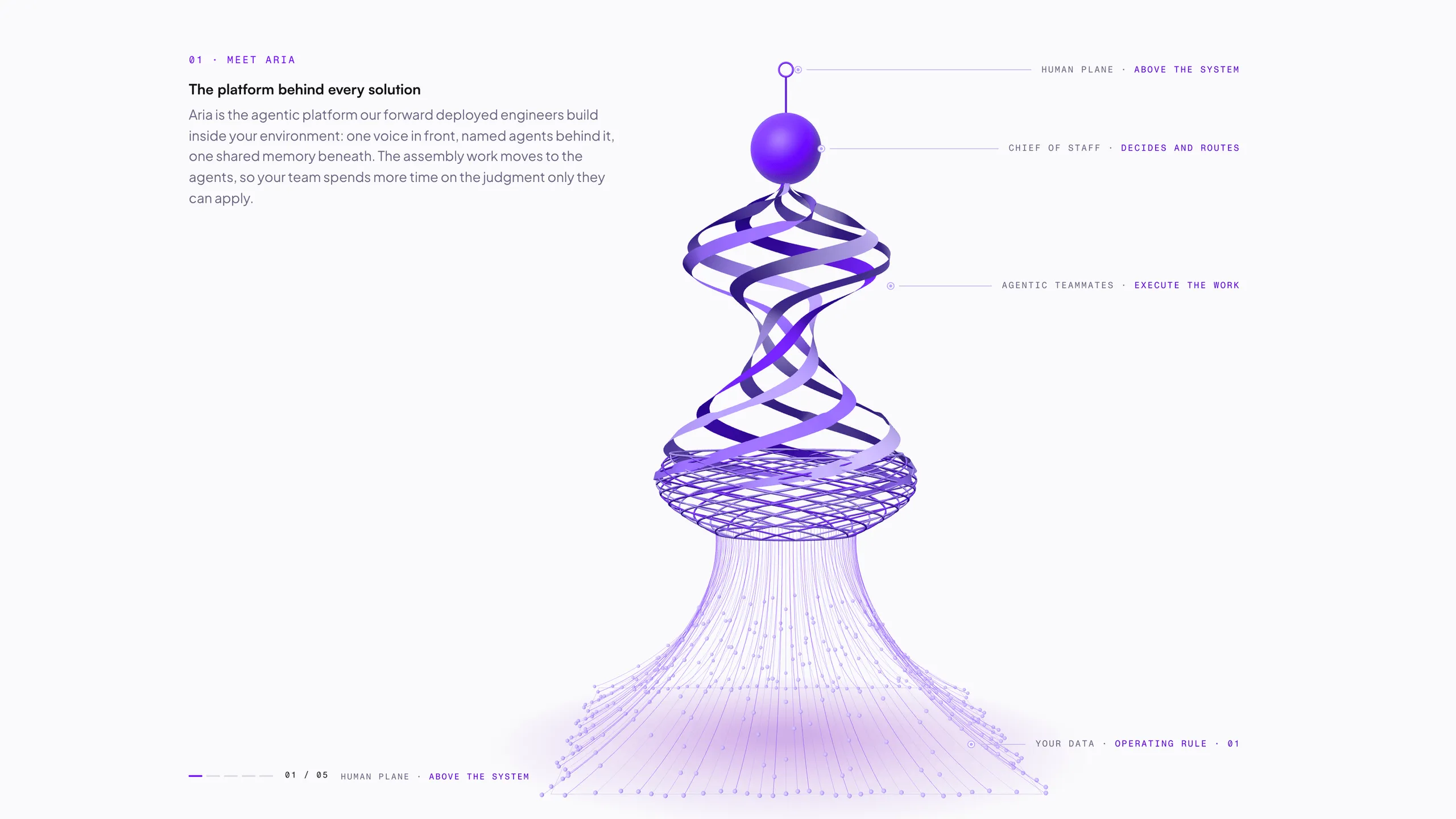
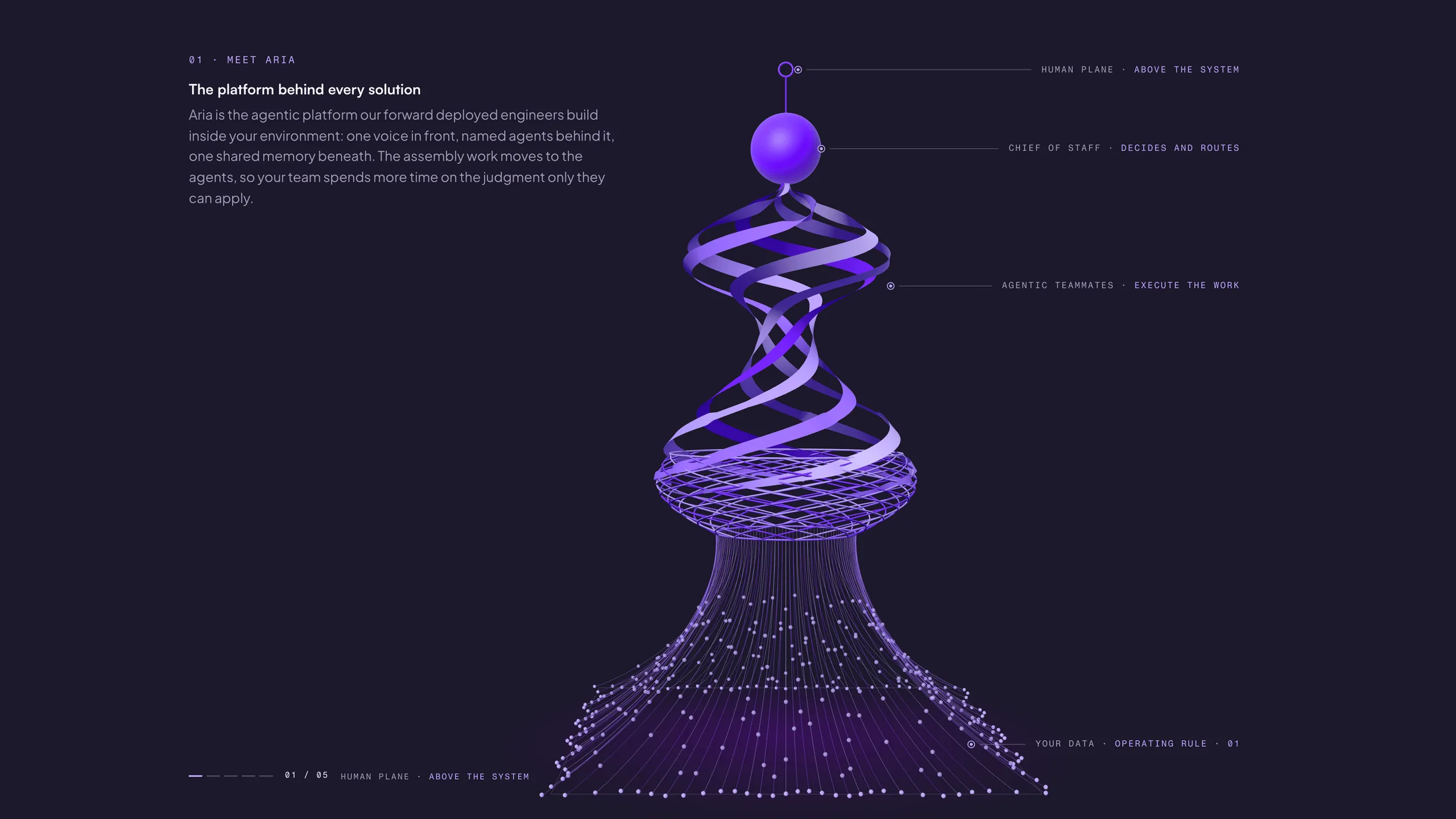
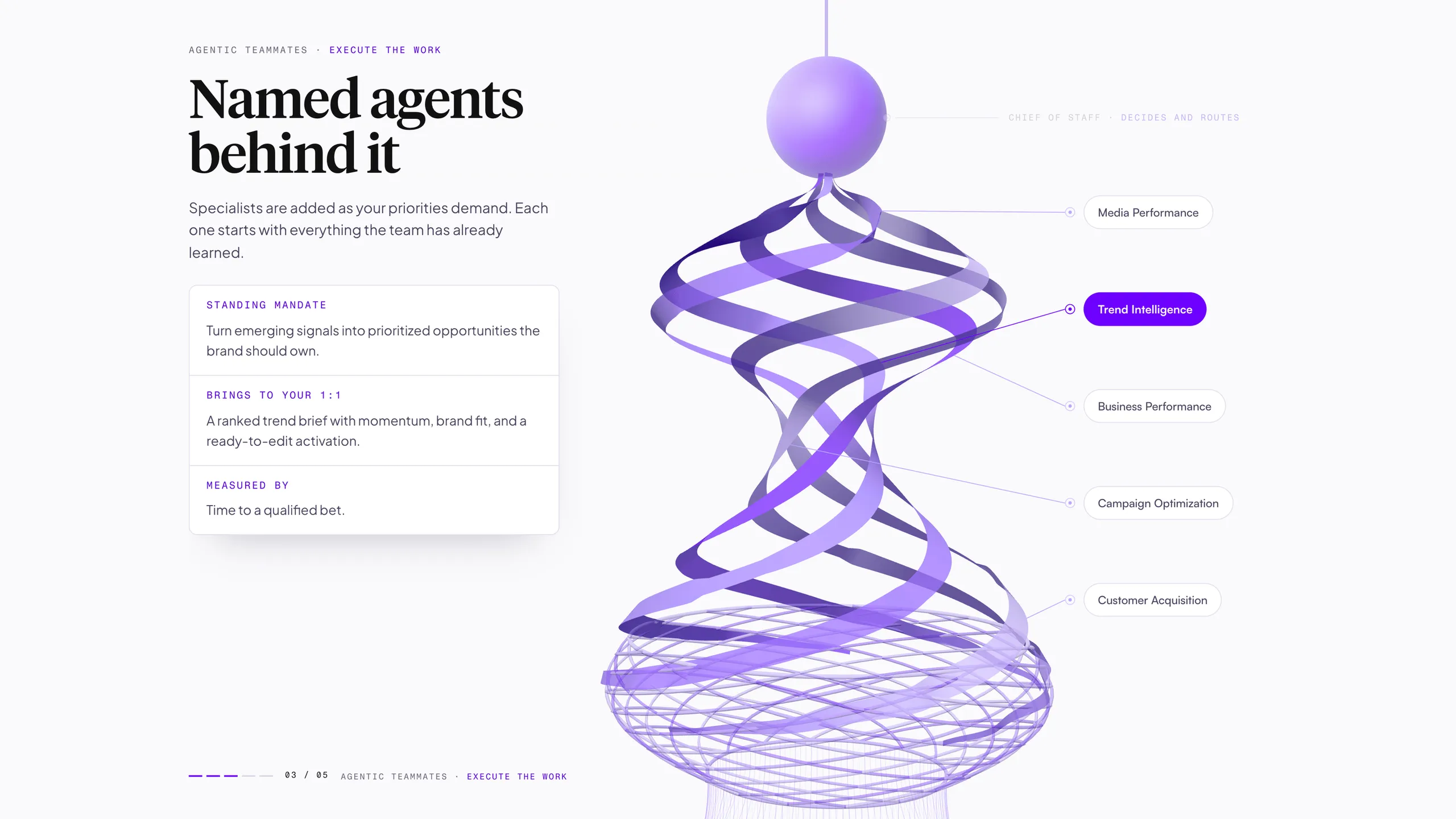
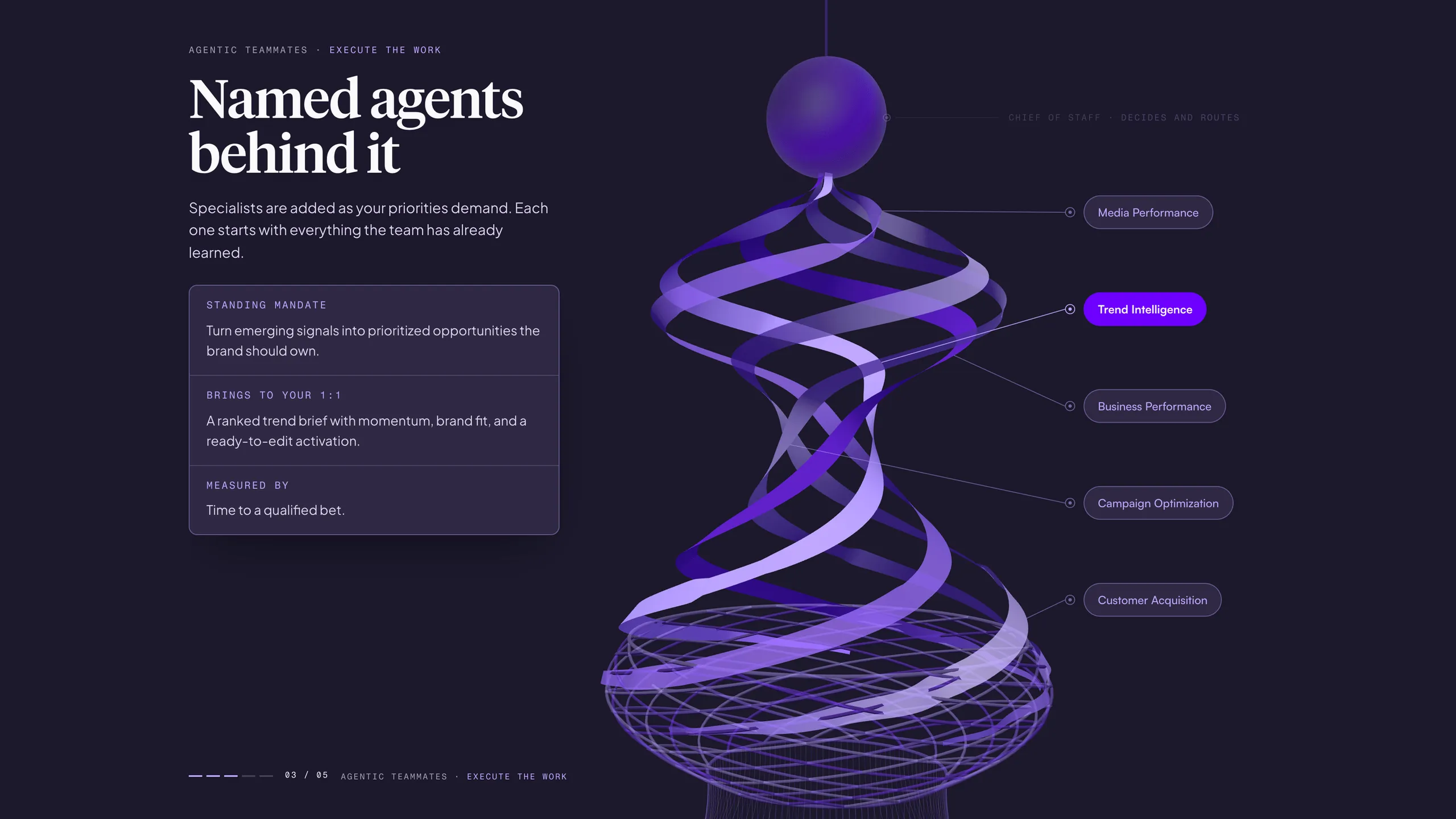
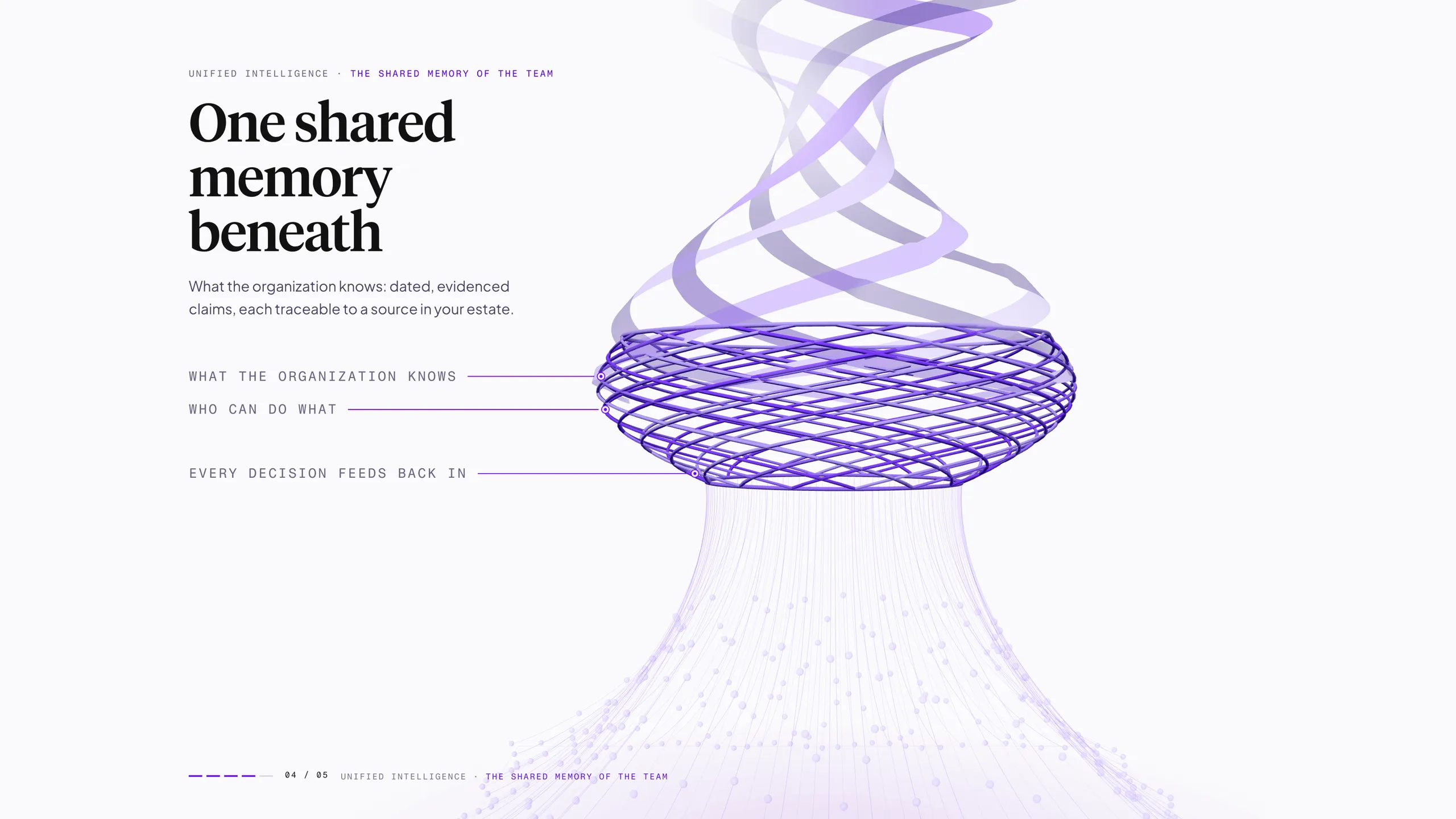
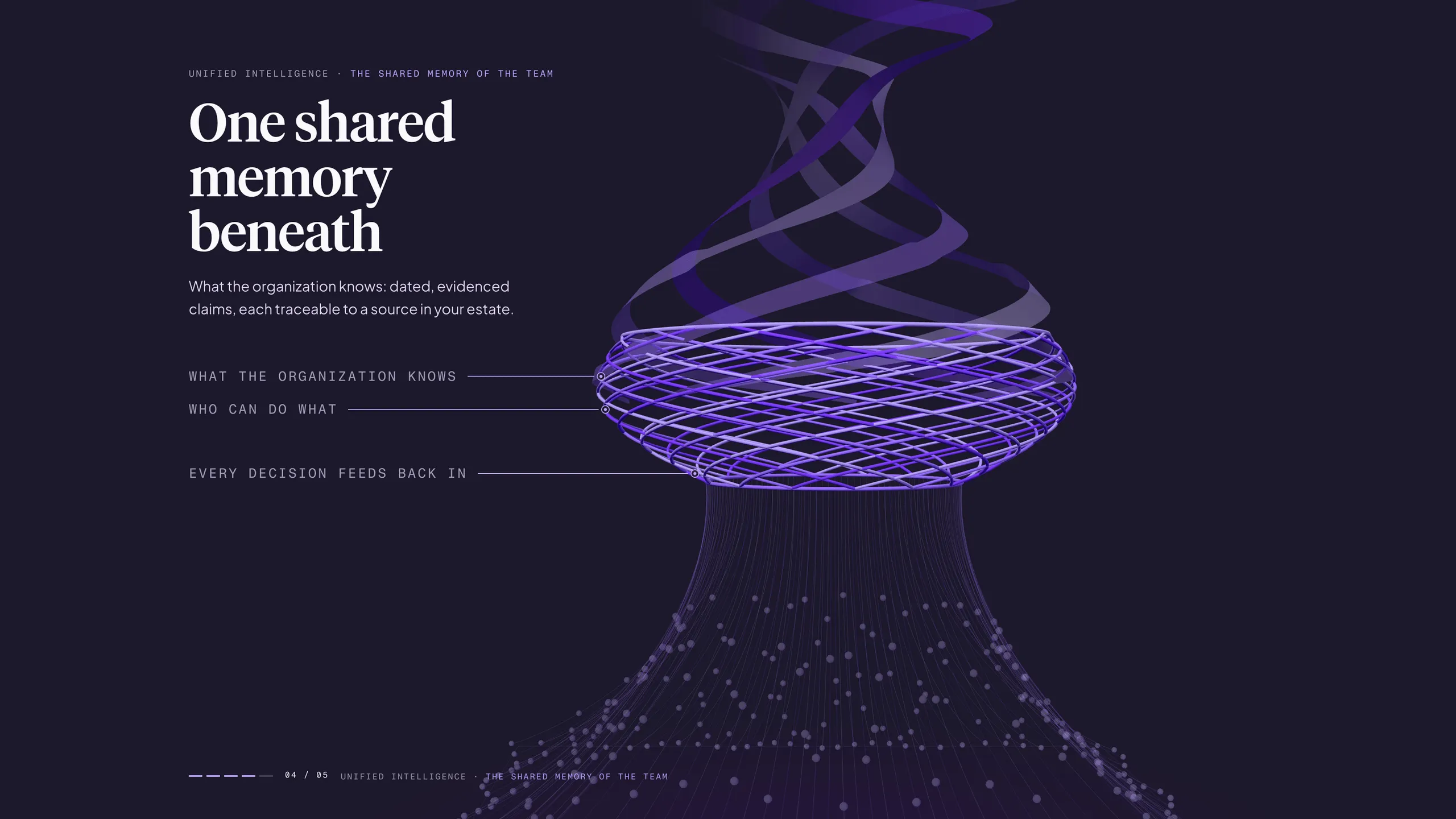
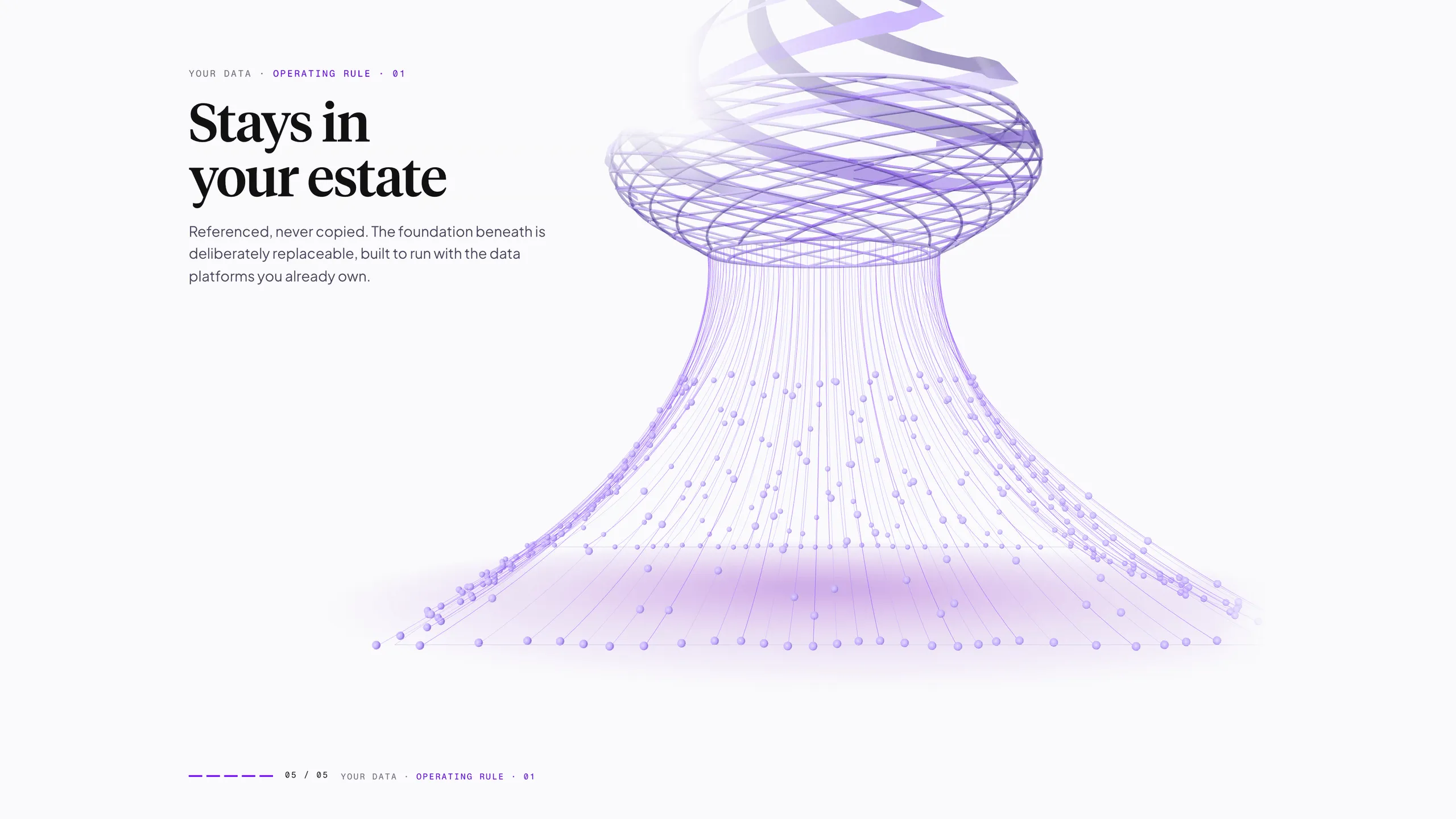
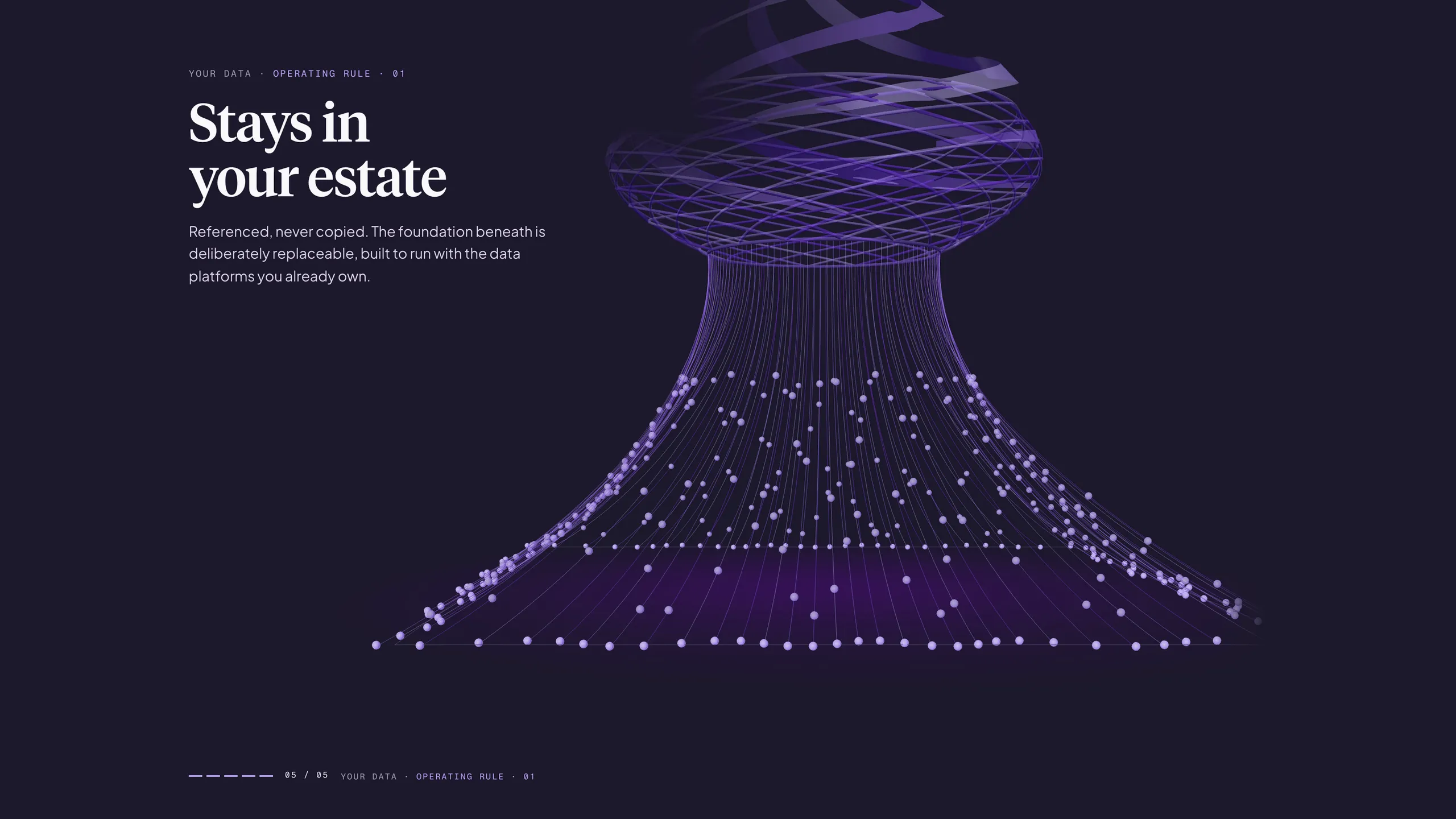
Every picture in the body of this study has a caption, on screen and for screen readers.
Major Achievements
Approved twice: the client approved the desktop monument on 22 September 2026, and the portrait version for screens 940 px wide and below the next day.
Every word from the page: every string the scene shows is verbatim from A.Team’s own copy, and all of it stays in the page as real text at every point of the scroll.
Ported one to one: the monument’s 1,522 lines of code came to this site unchanged apart from marked host fixes, and the port passed nine of nine probes, from reduced motion to a failed download.