
Renault — LATAM Design System
When I interviewed at Renault, my first question was, “Do you have a Design System?” The answer: multiple attempts had been made, but none had succeeded. While this seemed like a daunting challenge, it also sparked my excitement. The prospect of creating Renault’s first successful Design System, and adding a multimillion-dollar case to my portfolio, was a challenge I couldn’t resist.
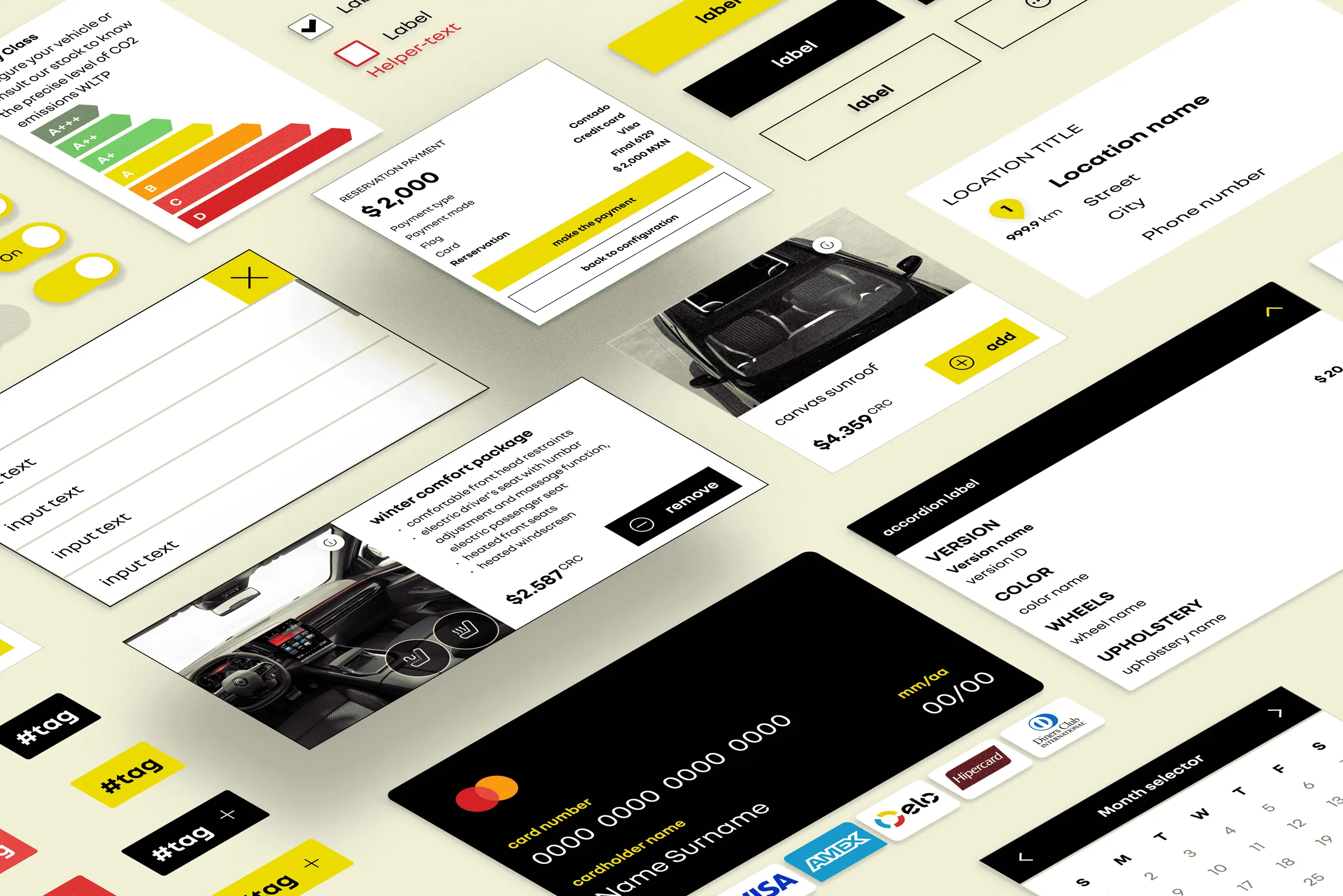
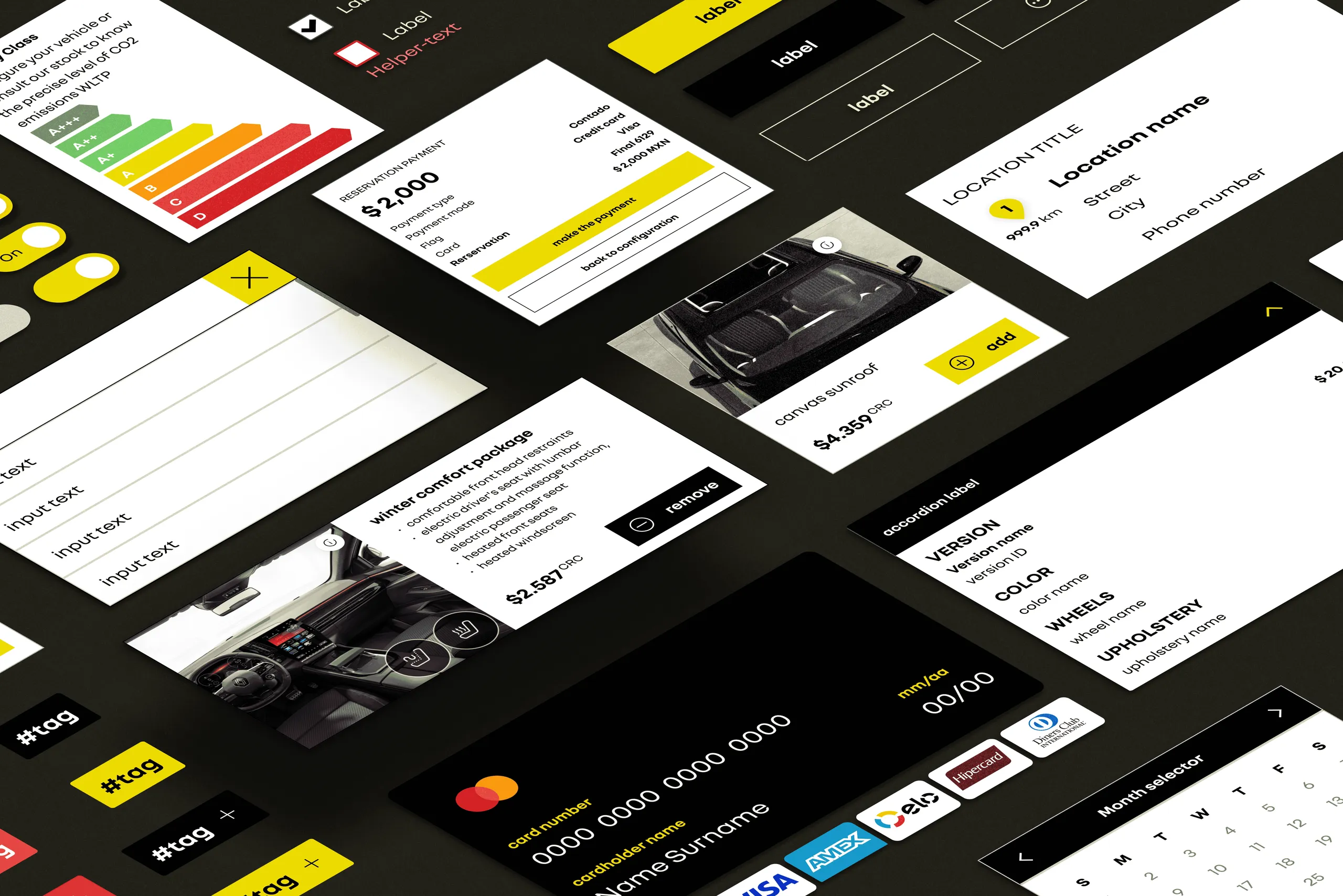
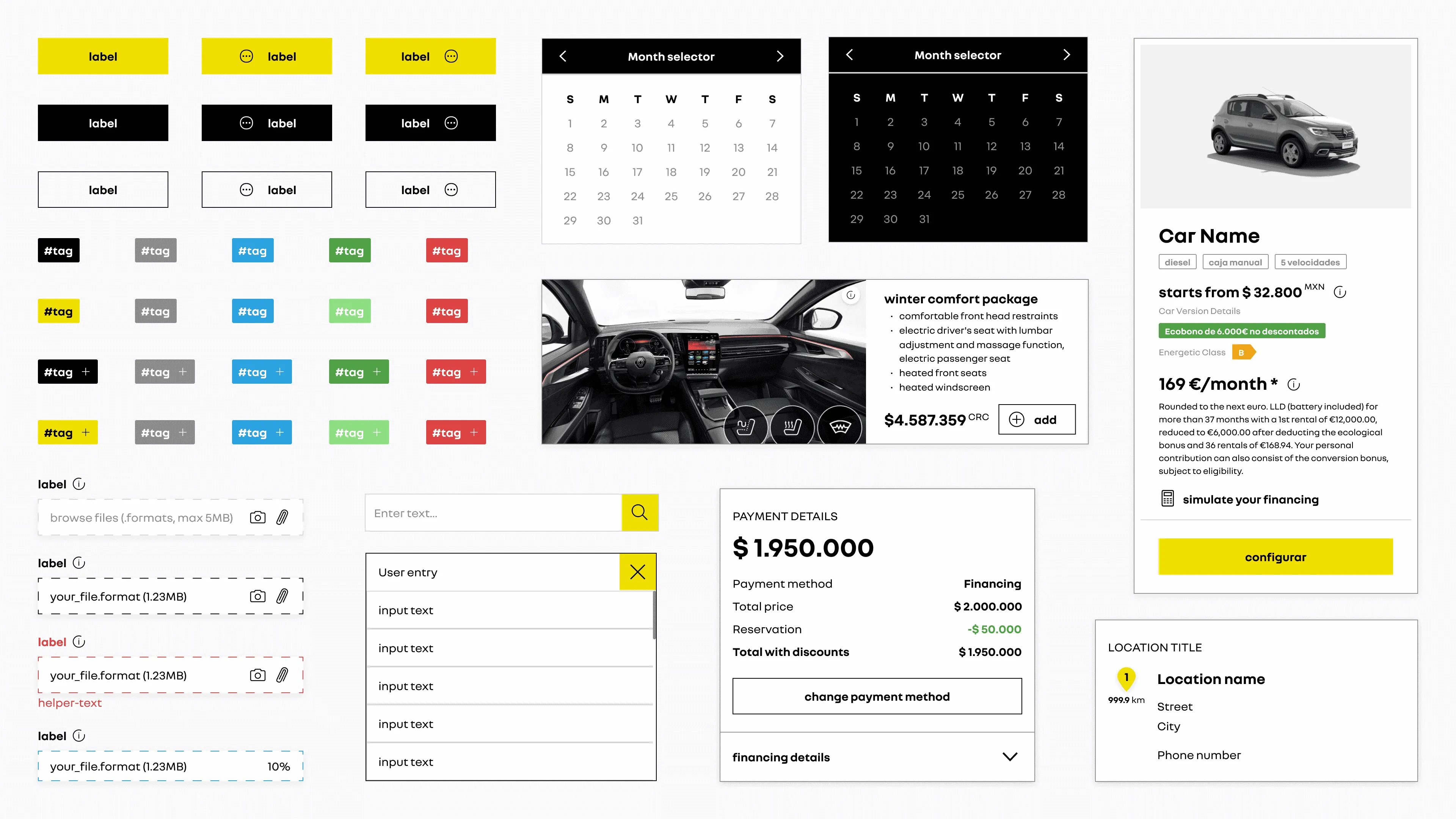
How Renault Finally Built a Design System
With a history of unsuccessful attempts, we needed a fresh approach to design, collaboration, and implementation. By aligning cross-functional teams and addressing key pain points, we built a scalable Design System tailored to Renault’s needs.
What did we do differently that allowed Renault to finally be able to say “Yes, we do have a Design System”?
High-Level Goals
Understand the scenario of existing libraries and possible failures that made the development of a Design System unsuccessful in the past;
Find and create the means to get key Stakeholders on board with the idea of dedicating time and money to a Design System;
Successfully create a Design System;
Understanding Developers
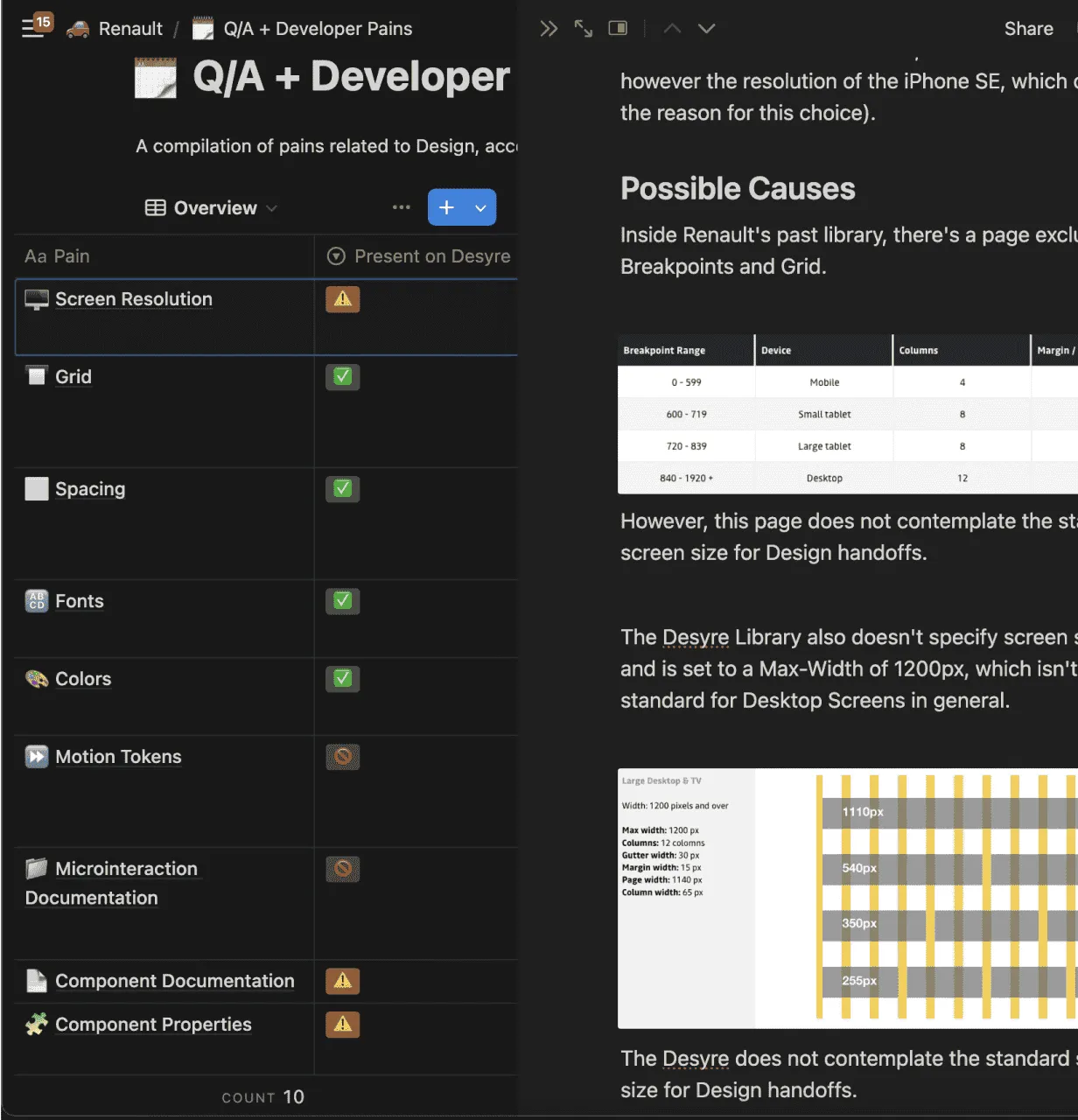
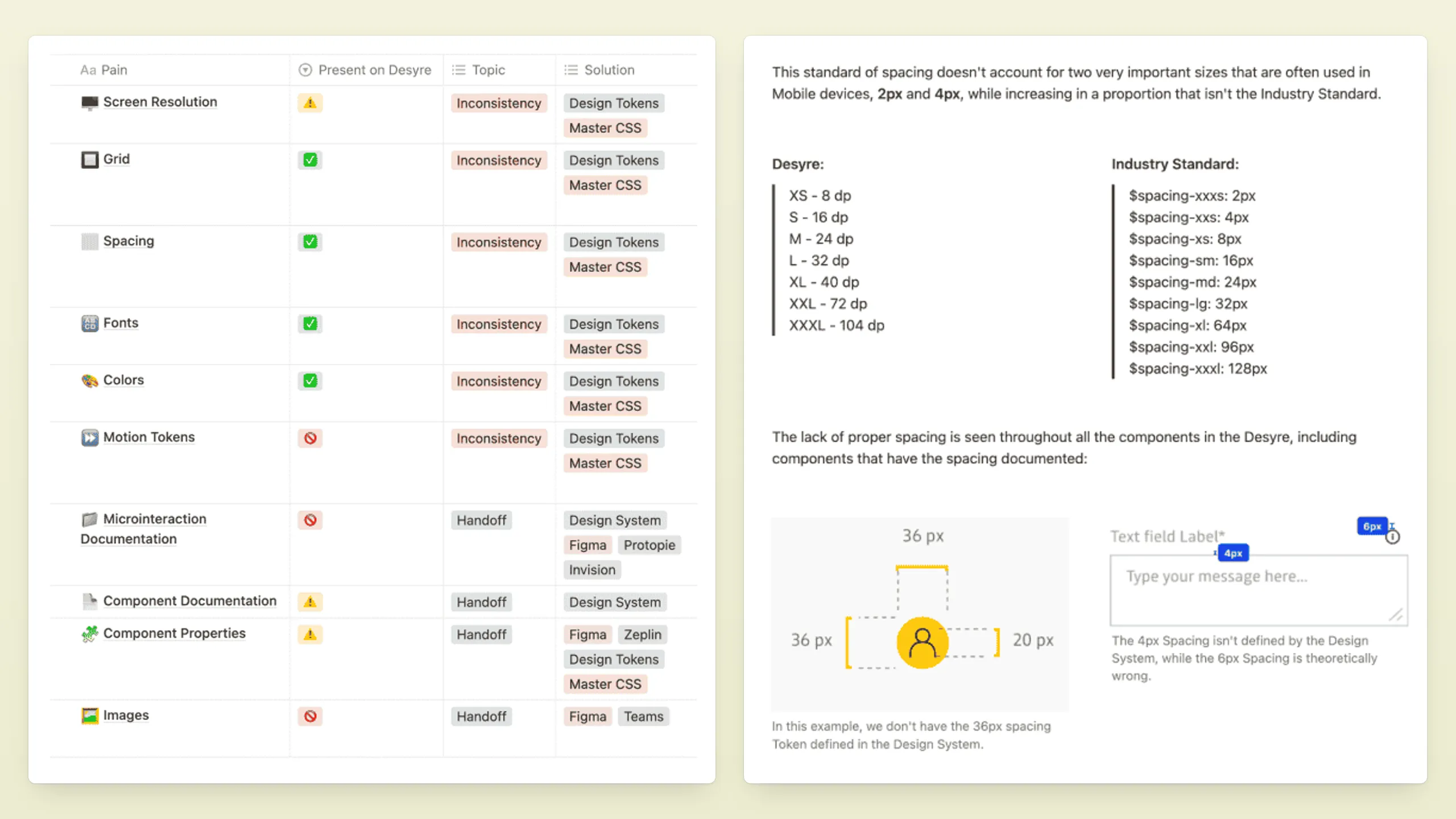
Upon joining Renault in January 2022, I uncovered a key challenge: the UX Pole struggled with products not being delivered as designed. Interviews with developers and Q/A analysts revealed that many issues stemmed from the lack of a robust Design System. To address this, I surveyed all web developers and Q/A collaborators, analyzed Renault’s largest component library, DeSyRe, and documented findings in a detailed Notion file. Each issue was outlined with its Problem, Possible Causes, and Solutions. These insights were critical in presenting a clear path forward to stakeholders, including Renault France, for deciding the future of DeSyRe.
The Great Chess Game
I presented my analysis to several stakeholders: the Design System Manager at Renault Digital in France, who approved the UX Pole LATAM to proceed with a new Design System, and the Head of IT at Renault LATAM, who also approved the creation of a Design System Guild after I demonstrated how a DS could address the identified issues and mentioned Renault France’s support. To convince the business areas of the benefits, I addressed concerns through educational presentations.
Around that time, a production issue led to two sprint freezes in separate teams. Members of the Design System Guild advocated for working on the Design System components while development tasks were on hold.
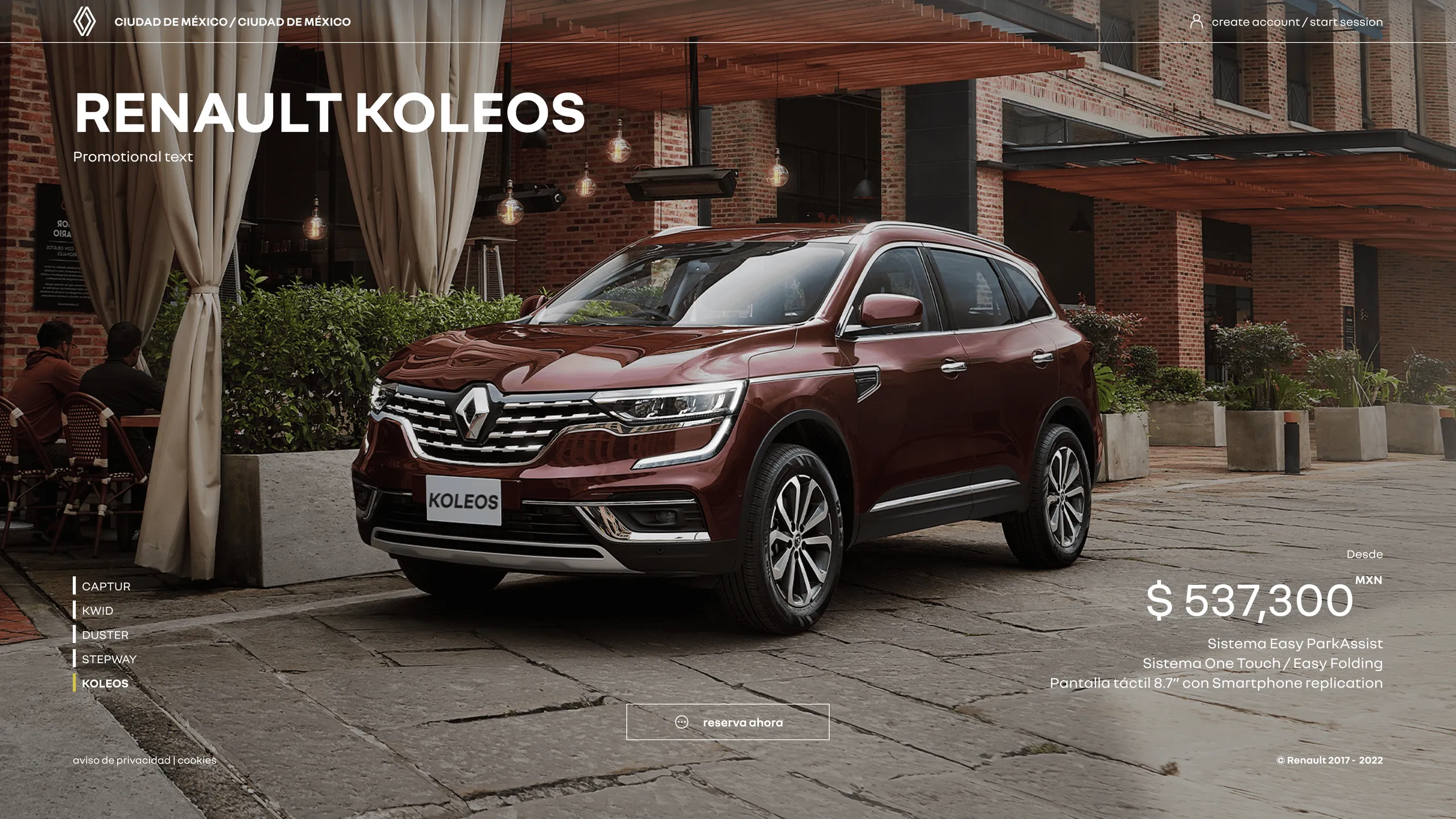
Afterwards, we started development of the Mexico E-Commerce, where we first utilized components from our Design System. Within weeks, we demonstrated the scalability and time-saving benefits of the DS, showcasing its value to the business areas. Despite not having a dedicated team or time allocation, we meticulously documented every component in Figma, followed by development, QA testing, and implementation in the Mexico E-Commerce. Subsequently, we applied this workflow to the Colombia E-Commerce project (read more about this project here).
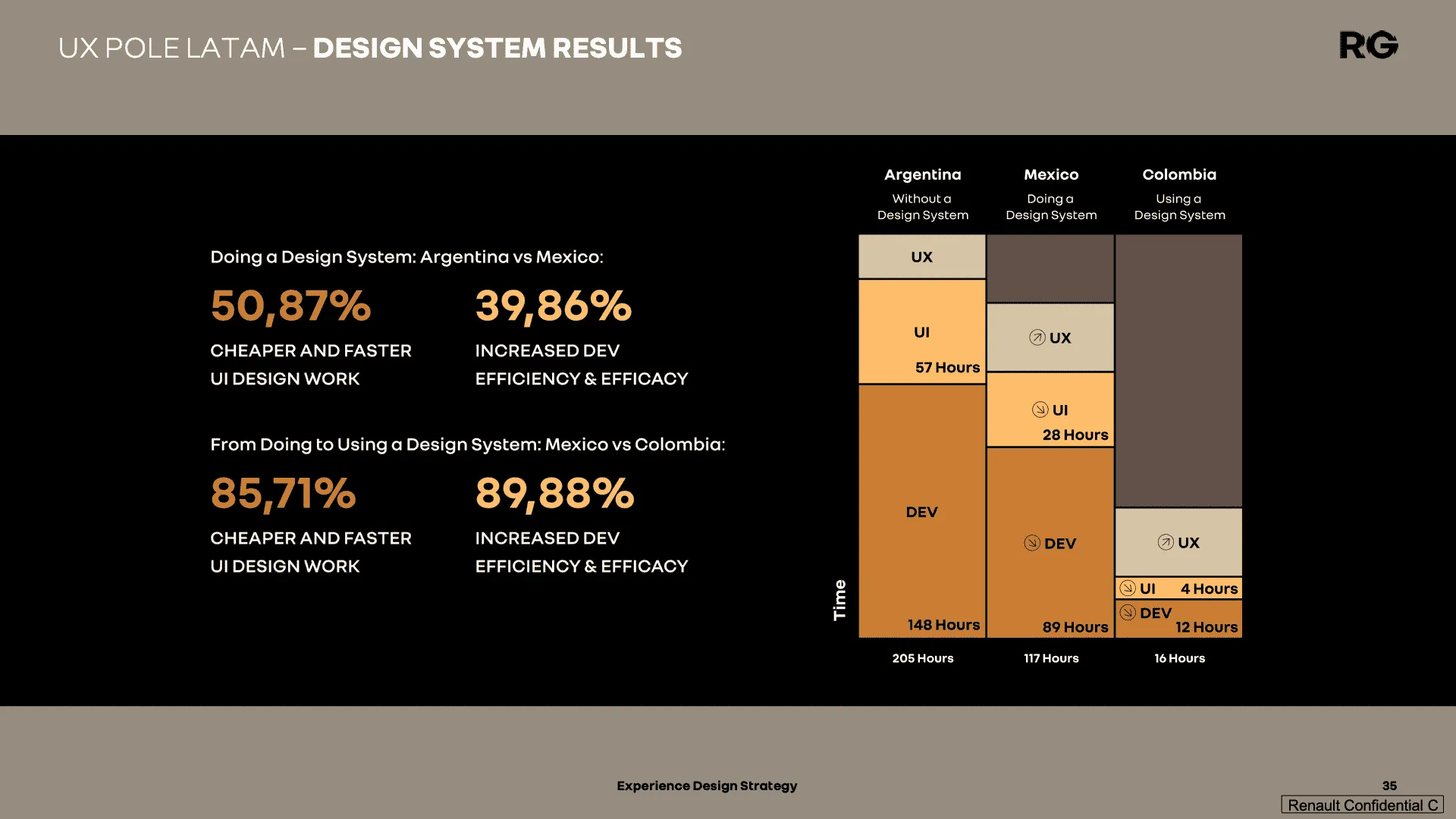
By analyzing Jira Tasks related to the screen above, from the Argentina E-commerce (without a Design System), Mexico E-Commerce (with a Design System), and Colombia E-commerce (with a Design System), we obtained three different and accurate metrics of development time.
(Note: the improvement in time between “built without a Design System” and “built creating a Design System” came from changing our workflow to Atomic Design and improving the quality of our documentation, answering the needs reported by the developers in the interviews of January of 2022).
In late December 2022, Renault Digital invited Carlos Duarte and me to personally present our Design System work to them in France. While they had heard about our efforts, they had not yet seen the results. Our presentation received overwhelming praise and was used as a benchmark in Renault France to demonstrate the benefits of having a Design System and a dedicated team.
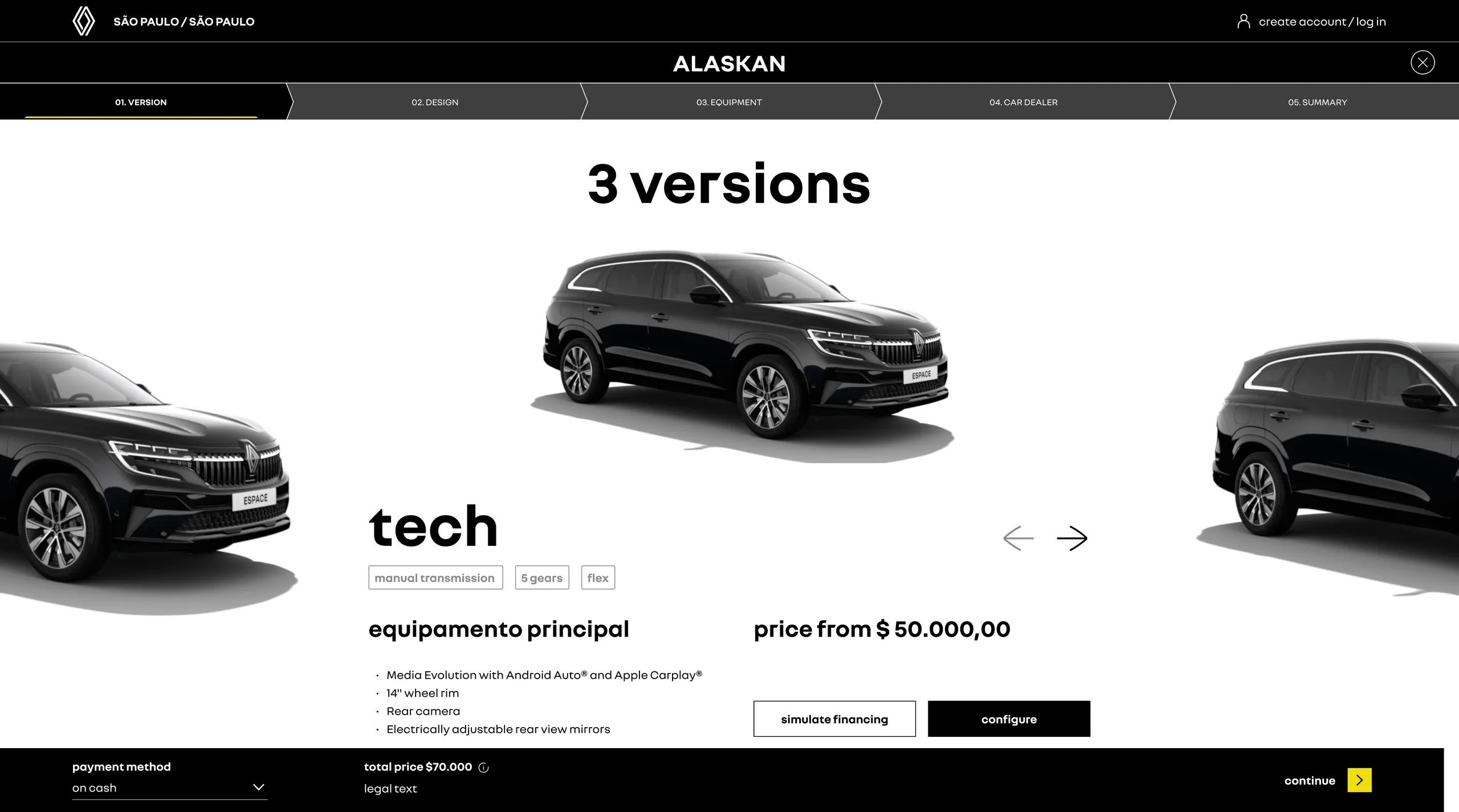
As a result, my team in LATAM and I were recognized as the "main collaborators" in global Design Ops decisions, providing us with greater governance over our design autonomy. Below you will find the entire car configuration journey, 100% built using components of the LATAM Design System.
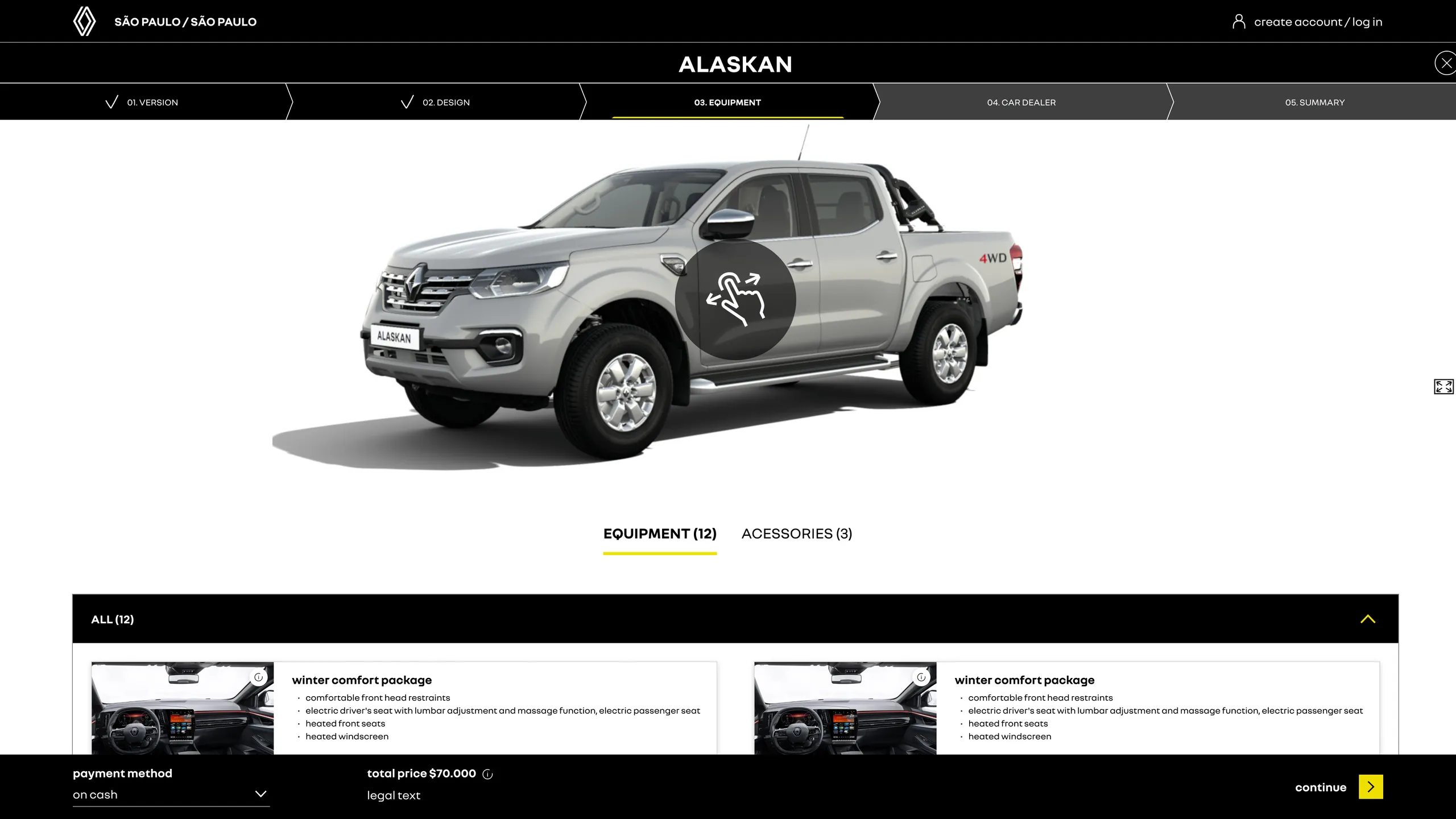
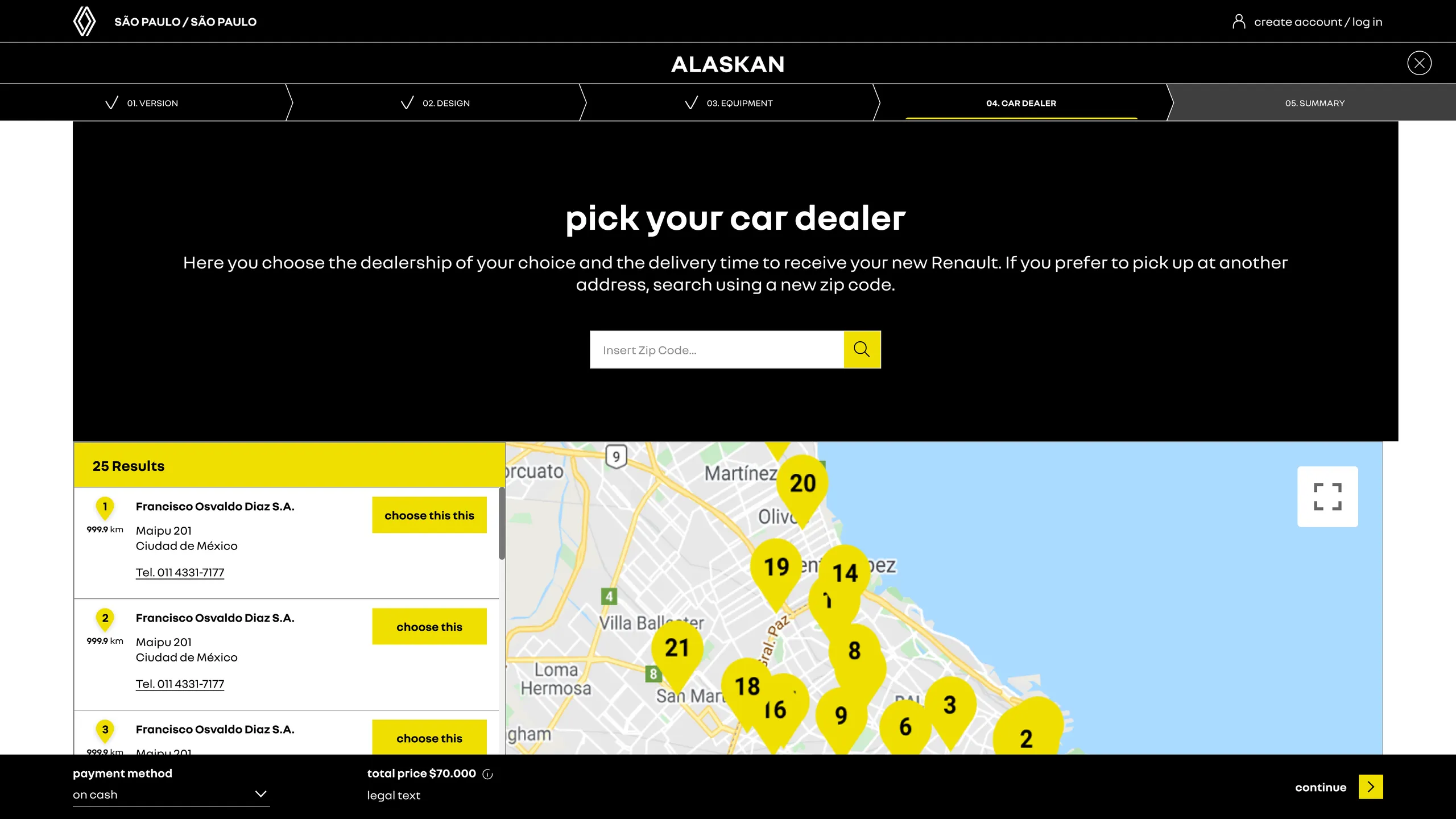
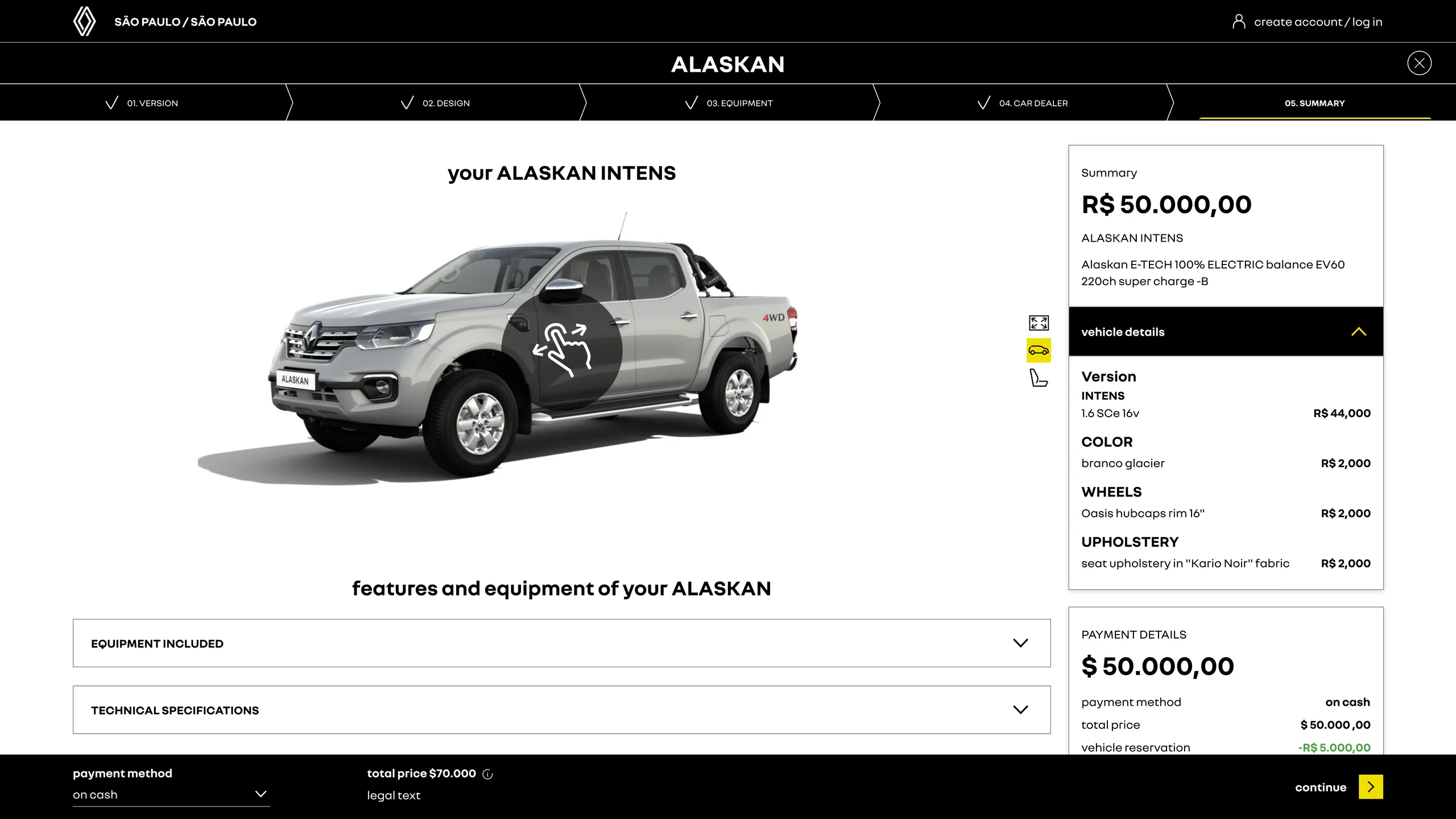
Every picture in the body of this study has a caption, on screen and for screen readers.
Major Achievements
LATAM as a global reference: with 107 components used by 30 teams (27 outside LATAM), our Design System became Renault’s first fully operational one worldwide. This milestone positioned the UX Pole LATAM as a UI leader, influencing global Design Ops decisions.
Results proven in numbers: we successfully demonstrated the value of a Design System to previously skeptical Business Areas, reducing the cost of creating an E-Commerce by 92% and achieving similar cost reductions in other projects.
A token of recognition: I was honored to receive the "UX Pole Highlight" Award for 2022 in recognition of this work.