
Mottu — Design System (Mottu Engine)
At Mottu, inconsistent design practices and a lack of standards across teams created technical debt and frequent rework, harming efficiency and increasing costs. With the app central to client interactions, I led a comprehensive redesign to modernize its visual identity, resolve inefficiencies, and establish a unified design system.
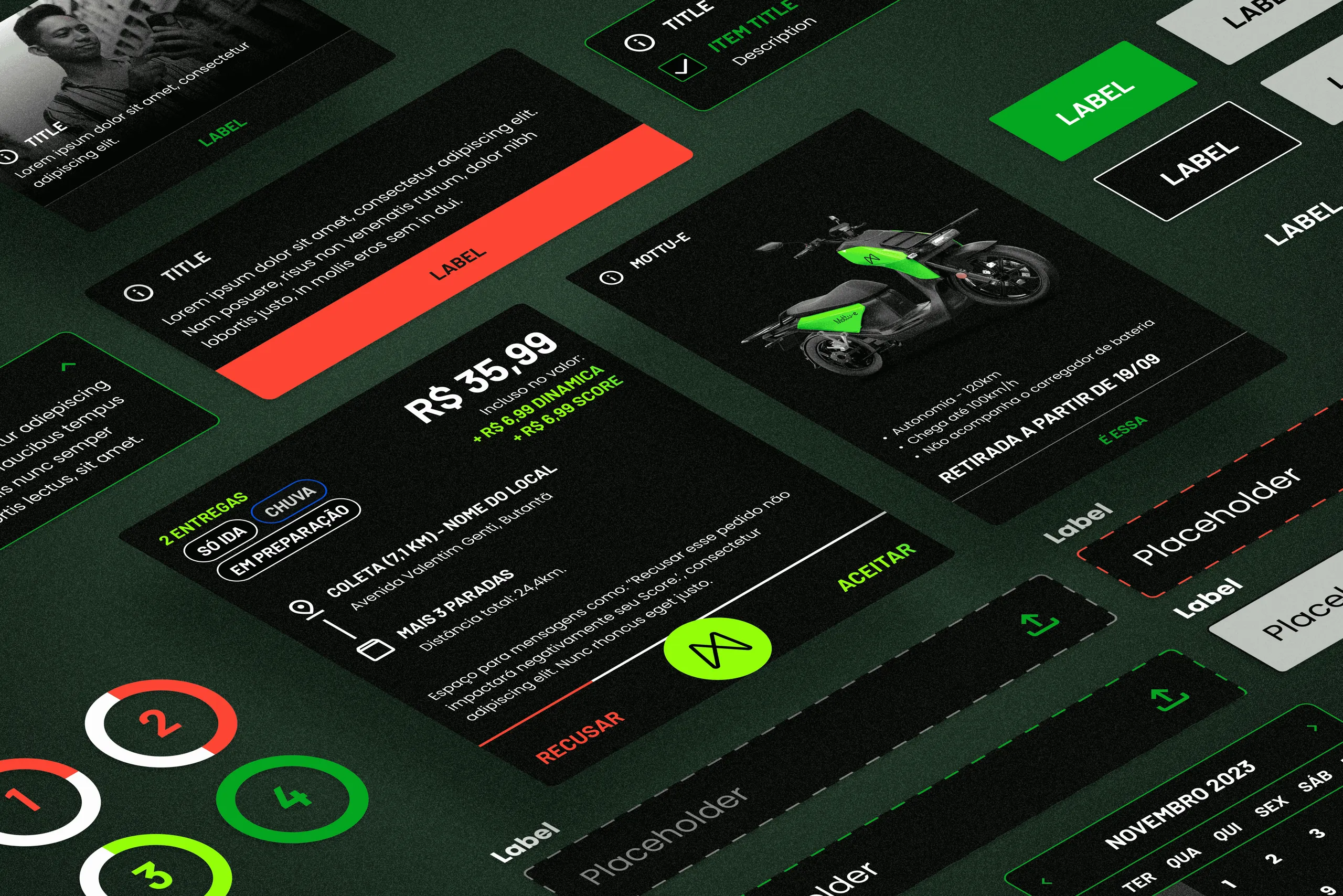
Fixing Mottu’s Digital Foundation
Mottu is a startup for motorcycle rental and logistics services. Our visual identity felt outdated and lacked appeal. Throughout the app’s lifecycle, developers, designers and PMs had adopted several inefficient practices, despite the app being crucial for client interactions and product management. This led to a shortage of components, inconsistent design standards, frequent rework, and significant financial losses.
Given the substantial technical debt, how could we effectively tackle these issues in one strategic move?
High-Level Goals
Enhance the app’s visual appeal and usability, benefiting our clients and increasing the perceived value of our products.
Introduce Design System practices to benefit Designers and Developers, as well as Stakeholders that designed screens.
Use these practices and components to redesign the entire app.
same filepoorly organized
styles
styles
Most not being used
throughout the file
1093 Uses of
color styles
1066 were undeclared
1570 Uses of
typography styles
1552 were undeclared
The Worst Figma I’ve Ever Seen
When I first joined Mottu, I was shocked by the state of our Figma file, which I jokingly labeled "The Worst Figma I’ve Ever Seen". After conducting a thorough audit, I identified the critical issues, summarized in the image.
Additionally, there were:
- 16527 Unnamed Vectors;
- 1627 Unnamed Lines;
- 14402 Unnamed Groups;
- 1581 Unnamed Frames;
- 6173 Unnamed Rectangles;
- 1260 Unnamed Icons;
- 2930 Unnamed Ellipses
- An uncountable number of unnamed Text Fields.
This involved addressing over 100,000 scattered elements in the project, all lacking components, autolayout, and libraries. It became evident that starting from scratch would be more straightforward than fixing these issues. Presenting this data to the stakeholders convinced them of the necessity of adopting a Design System approach.
One-man Design System Team
In my experience, convincing stakeholders to invest time and resources in a Design System can be the toughest challenge. Fortunately, all stakeholders this time were tech-savvy individuals who understood the value it would bring. Upon presenting the audit results, they embraced the idea, and I immediately began developing our Design System. I swiftly established the Design Tokens using Figma’s cutting-edge features, including Variables, Variants, and Themes, and had to refactor the entire Design System a few times to accommodate new updates.
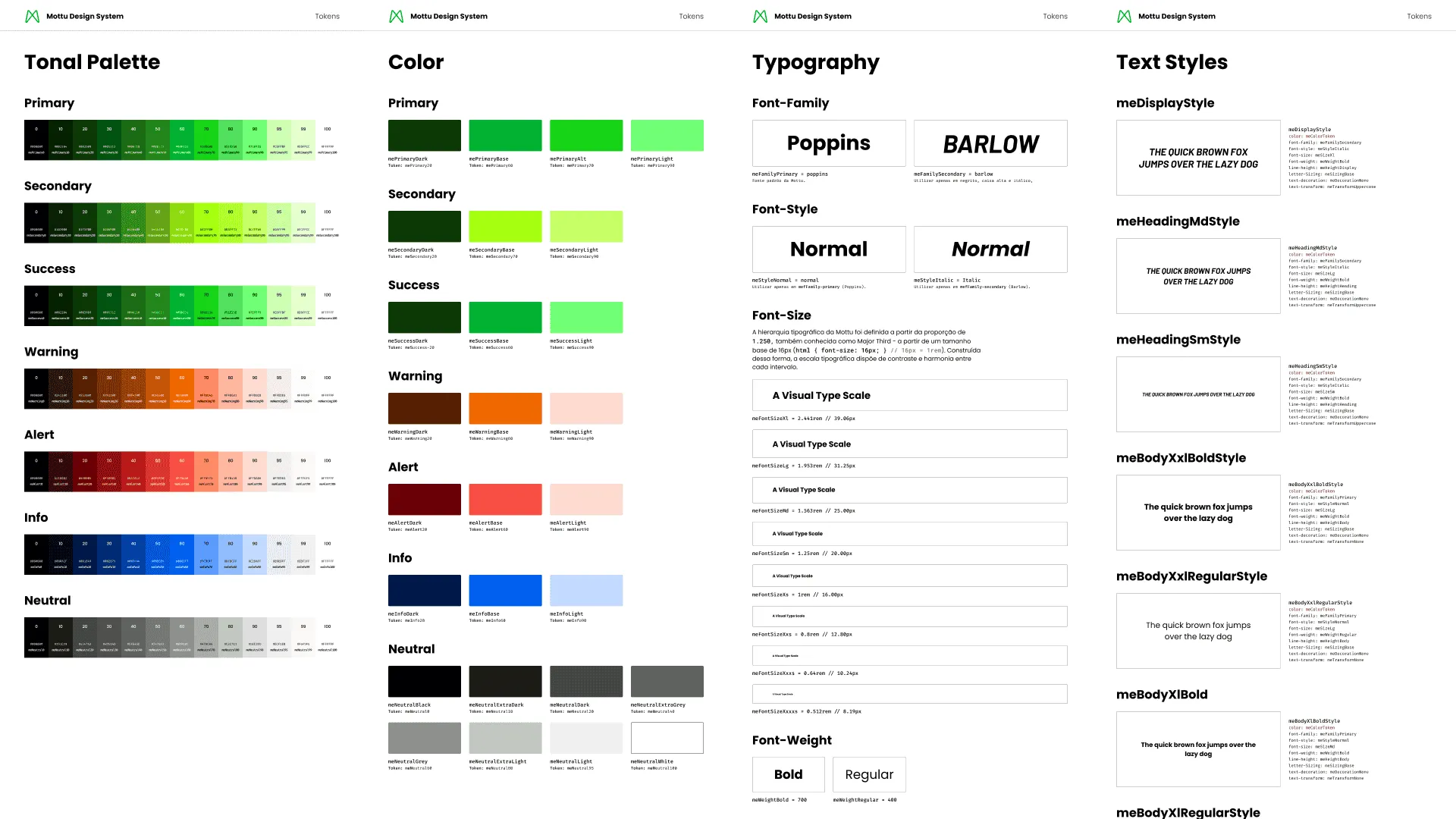
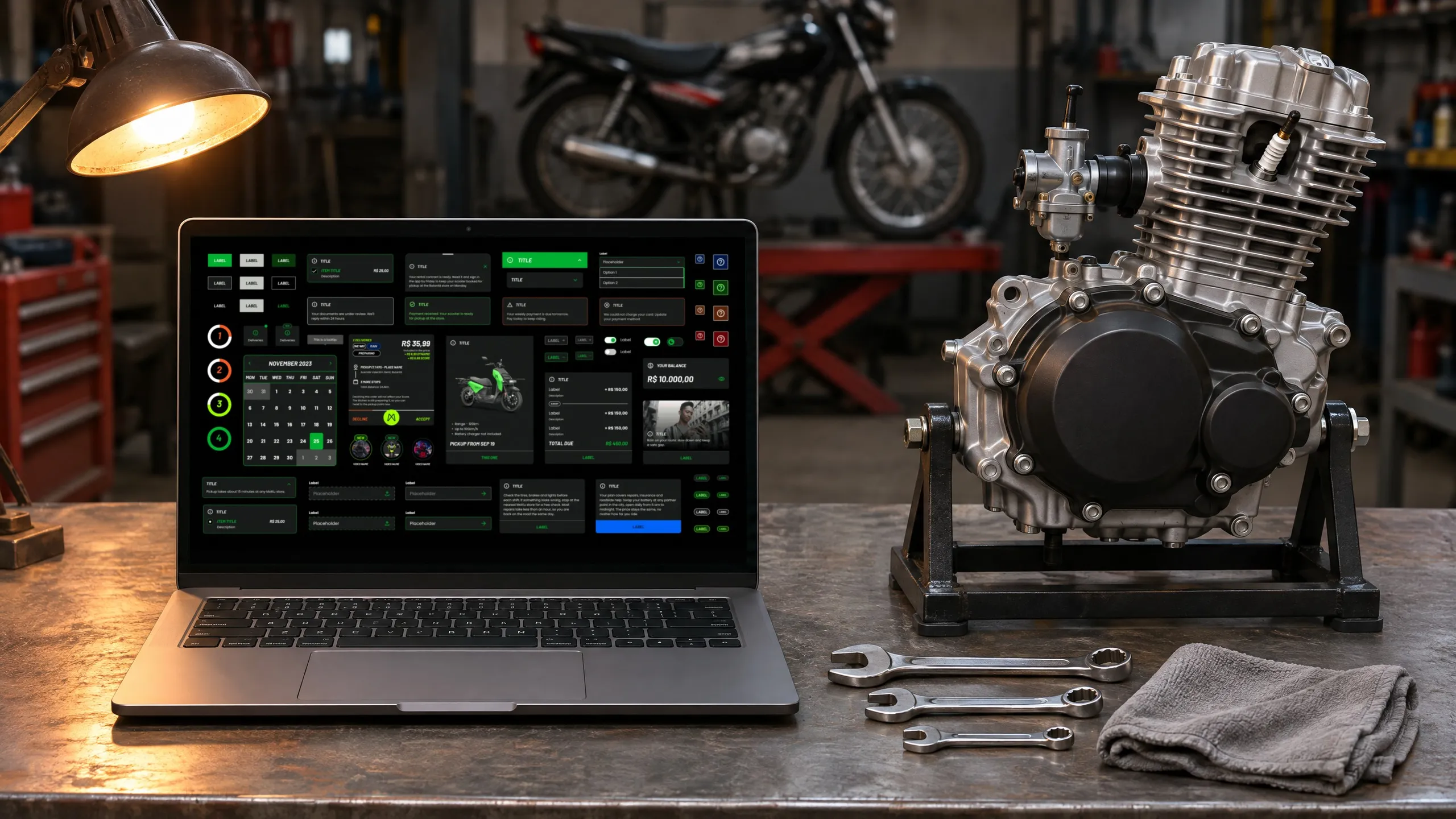
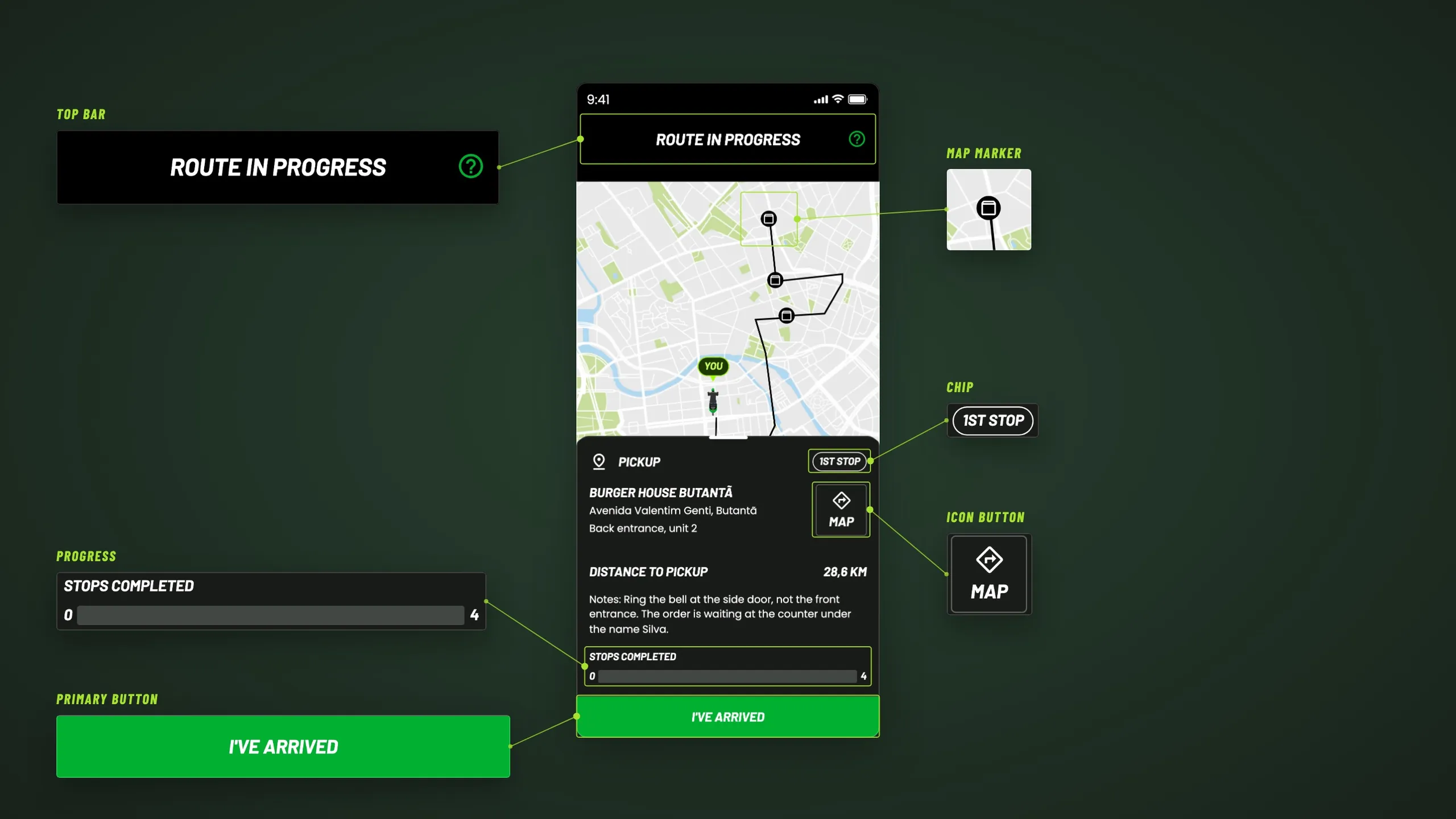
Within about three months, I had created most of the components needed for the app. After this initial phase, new components were rare and easy to create, thanks to the Atomic Design approach I adopted. To speed up the documentation of components, I used Nathan Curtis’ EightShapes Specs. This required meticulous use of the variables I had set up in every applicable situation. The result is as follows:
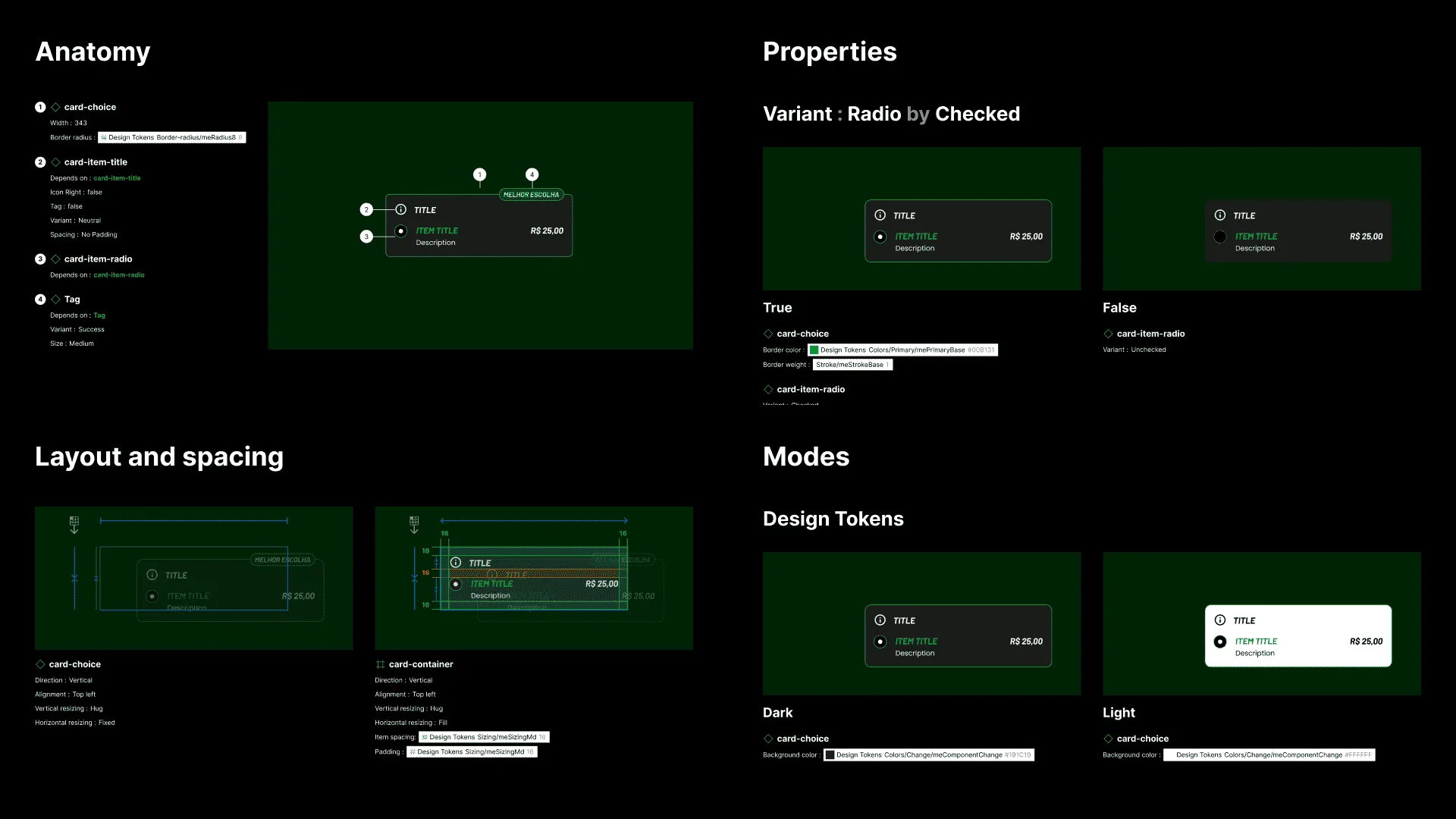
When I presented this proposal to the development team, they were thrilled and fully supportive. They were aware of some existing bad code practices causing issues and were eager to start fresh. We collectively named it the "Mottu Engine," which would serve as the core of our entire technology development, much like how an engine is the heart of our motorcycles. Gradually, we began refactoring all the screens in our app (you can read more in the Mottu - App Redesign case study).
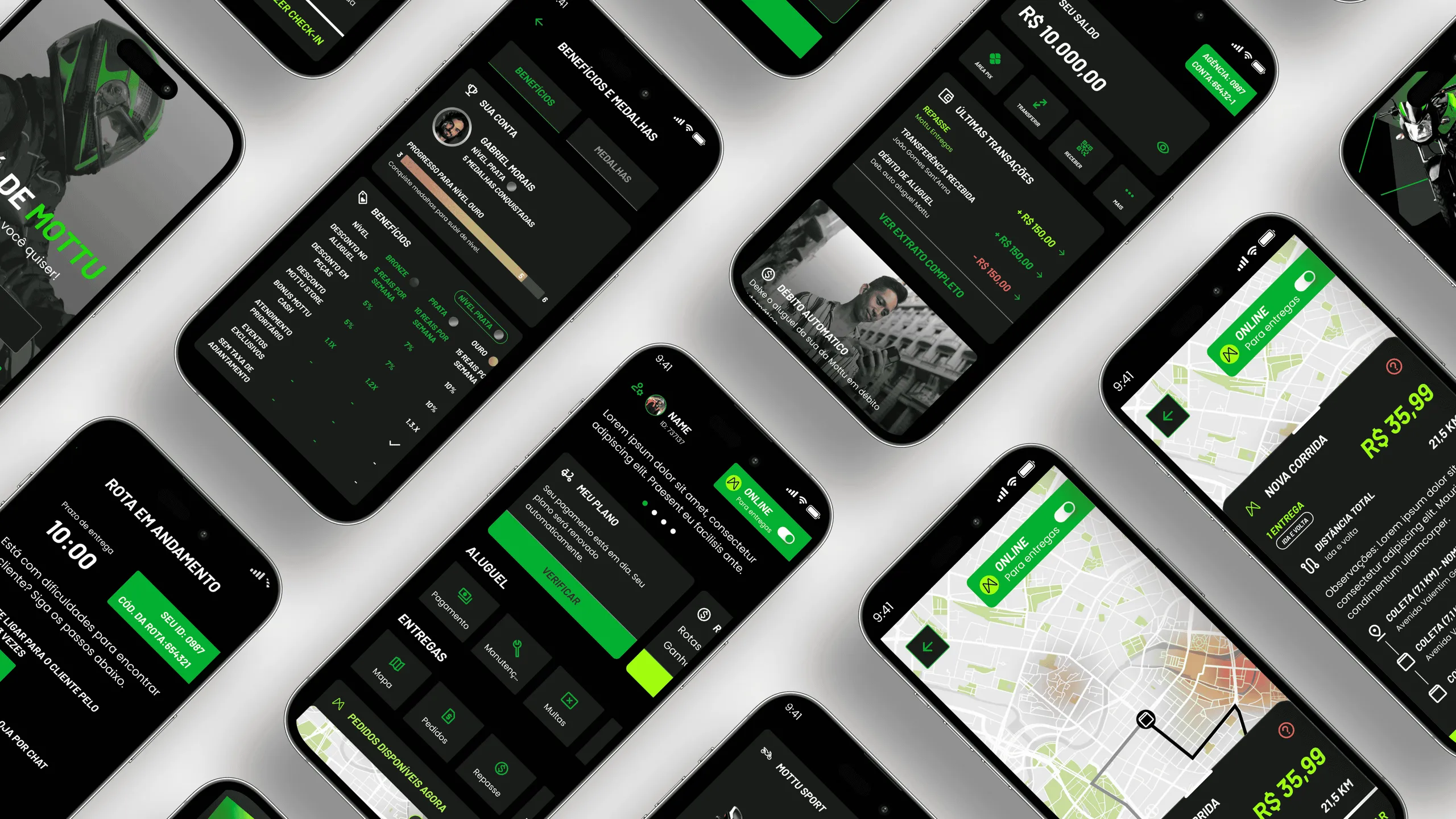
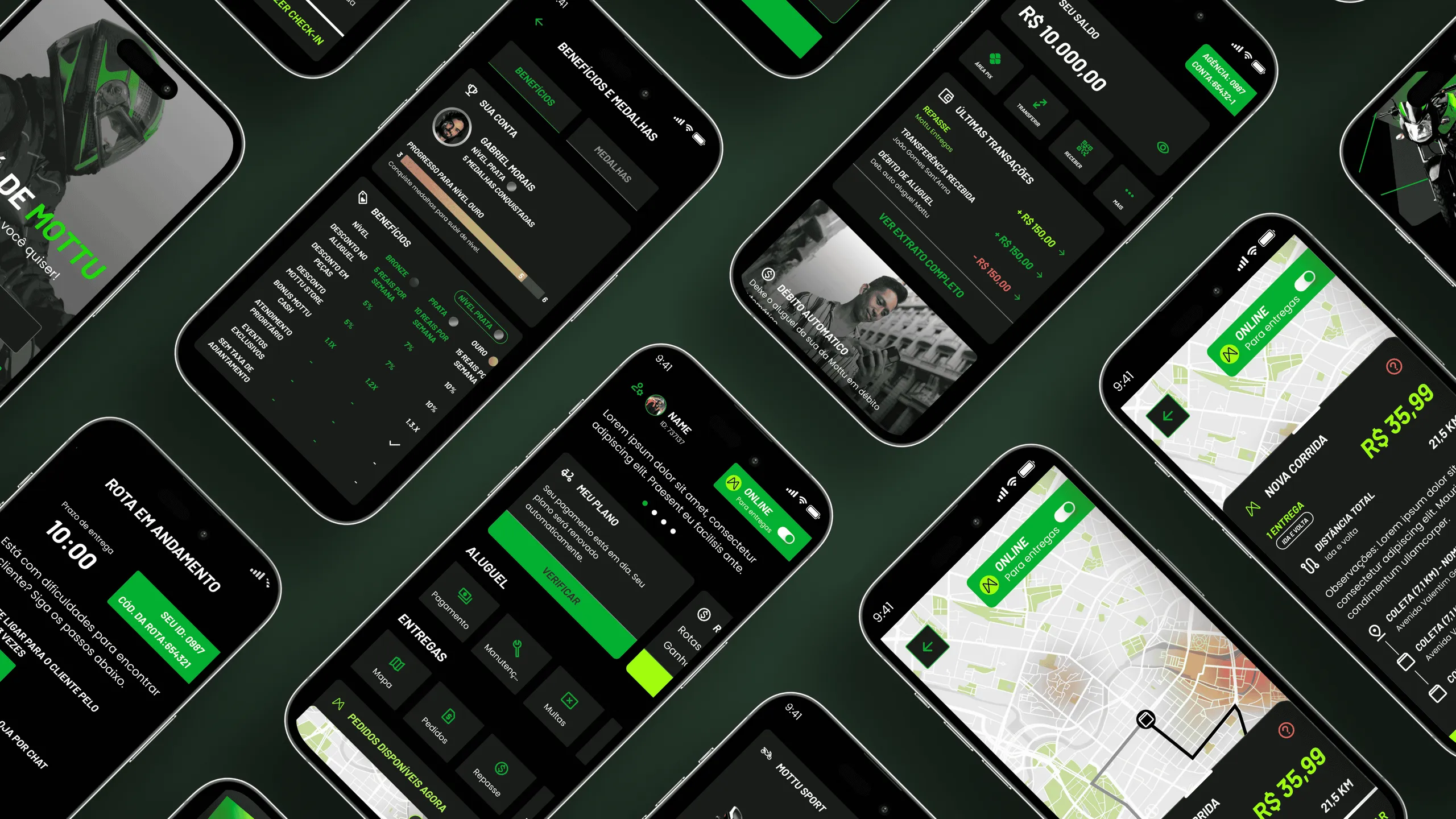
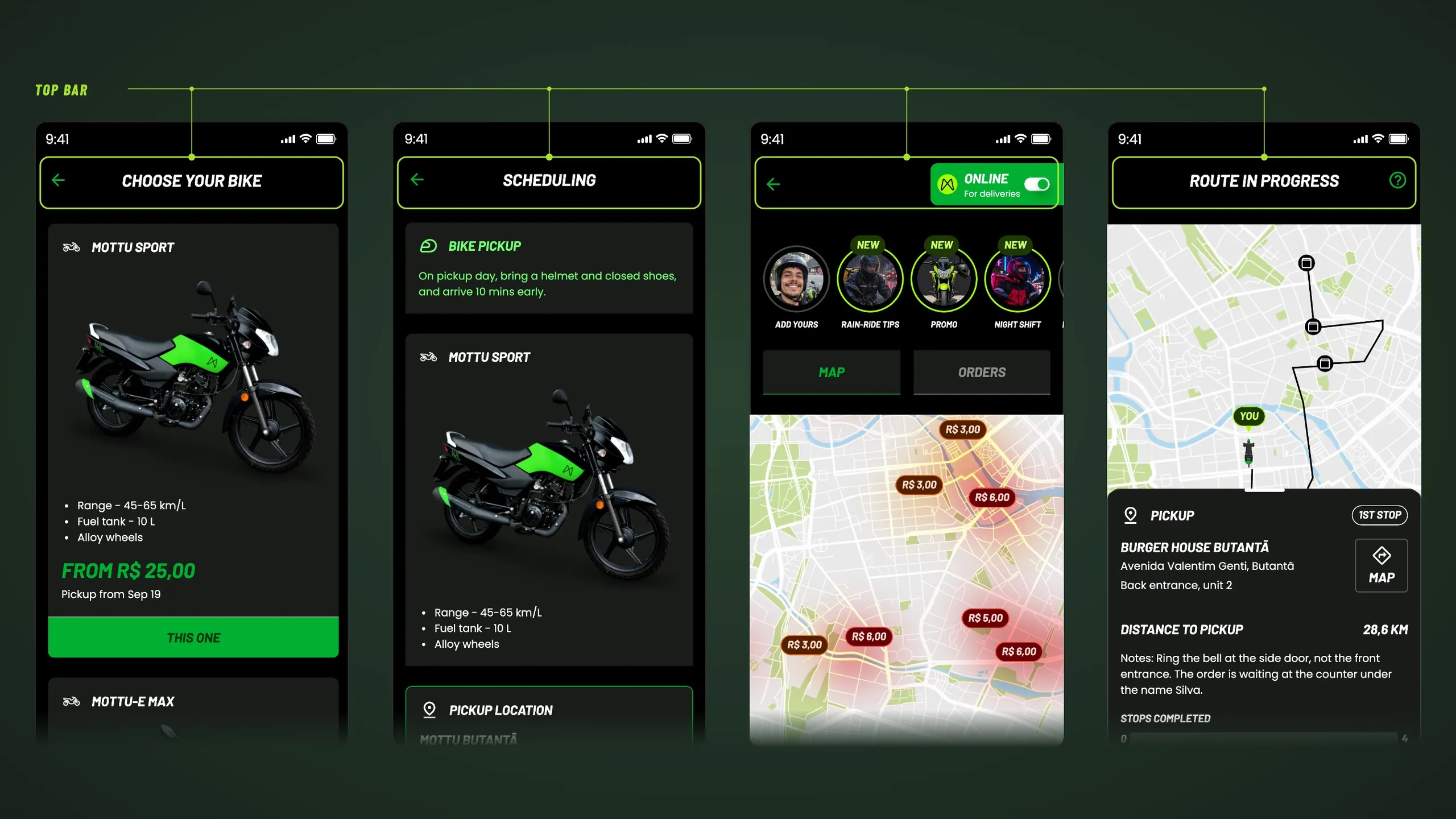
The construction of components also followed the Atomic and Modular design principles, ensuring consistency and reusability throughout the app. Here are some of my favorite redesigned screens using the new components from the Mottu Engine.
Every picture in the body of this study has a caption, on screen and for screen readers.
Major Achievements
Engine by the numbers: 73 components across 49 families, 303 variants in total, each documented with anatomy, properties, and spacing specs. All of it built and maintained by a design system team of one.
Tokens instead of guesswork: 154 design tokens powering every component, with light and dark mode built in from day one. Change a token and the whole app follows.
100% adoption: every screen in the app was gradually rebuilt on Engine components, replacing duplicated files and lost screens with a single source of truth. You can see the result in the App Redesign case study.